



A recent analysis from the Center for European Policy Analysis indicates that Russia and China are advancing beyond NATO countries, including Canada, in the development and deployment of drones designed for challenging Arctic environments.
The study, published this week, highlighted infrastructure deficiencies, raised concerns about the sufficiency of funding, and pointed out procurement challenges that obstruct the incorporation of unmanned systems into Western military forces.
“The procurement process for Arctic-capable drones within NATO is characterized as fragmented, sluggish, and overly cautious, as many allies focus on systems made for temperate climates before adjusting them for Arctic conditions, which results in a limited number of NATO-certified platforms ready for Arctic operations,” stated the report, which was written by research fellow Federico Borsari and retired U.S. Major-General Gordon (Skip) Davis, who recently held the position of NATO’s deputy assistant secretary general for defense investment.
“Both Russia and China are investing in their own unmanned capabilities and defensive countermeasures while bolstering and expanding their presence in the Arctic, taking advantage of surveillance and security vulnerabilities,” the report noted.
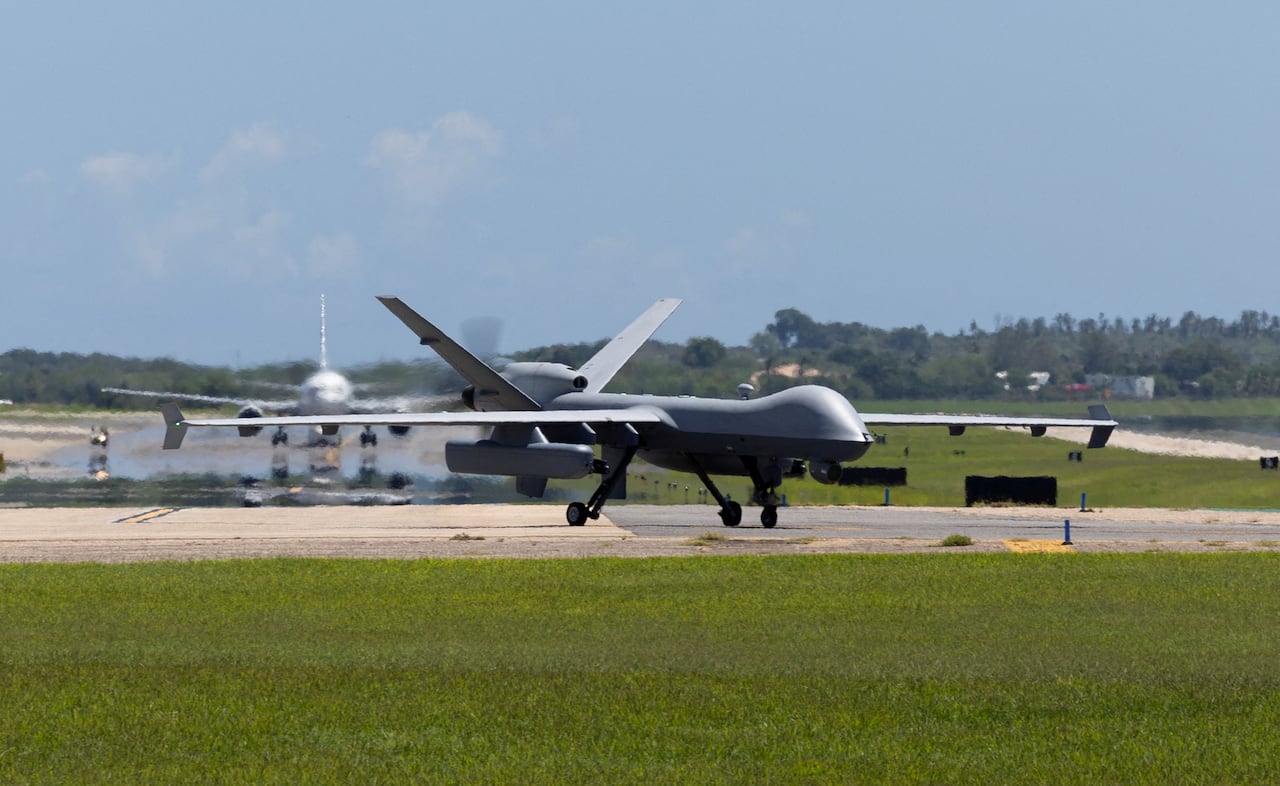
A U.S. Reaper drone is displayed in September. Canada anticipates receiving its first batch of Reaper drones suitable for harsh Arctic operations by 2028. (Ricardo Arduengo/Reuters)
Partly influenced by advancements seen in the Ukraine conflict, Russia is significantly increasing its investments in unmanned and robotic systems across various domains to bridge capability gaps and enhance conventional forces.
“Current annual drone production surpasses 1.5 million units, with support from China, Iran, and others, and Norwegian intelligence anticipates a dramatic increase in the number of Russian unmanned systems in the coming years,” the CEPA report noted, adding that the Russian Navy has recently inaugurated a new drone control center in Kamchatka, located in the far east of the country, to manage the development of unmanned systems for maritime surveillance and anti-submarine operations.
-
As China explores the Arctic, Canada’s military is preparing for confrontation
-
Defence minister says ‘we’re good’ to meet 2% NATO spending target by March
-
Zelenskyy offers to drop NATO aspirations, remains against ceding territory to Russia
In a similar vein, China has placed great emphasis on the development of “remote-sensing, polar-shipping technology, unmanned systems, and communication networks” in the Arctic, as stated in the report.
This week, Chinese media announced that the military had successfully conducted tests on a new unmanned aerial vehicle, named Jiutian, which can deploy up to 100 smaller drones while in flight.
Currently, Canada lacks drones with the capability to patrol the Arctic. The air force is in the process of acquiring 11 MQ-9B Reaper drones from General Atomics, with the first deliveries anticipated in 2028 and complete operational capability expected by 2033.
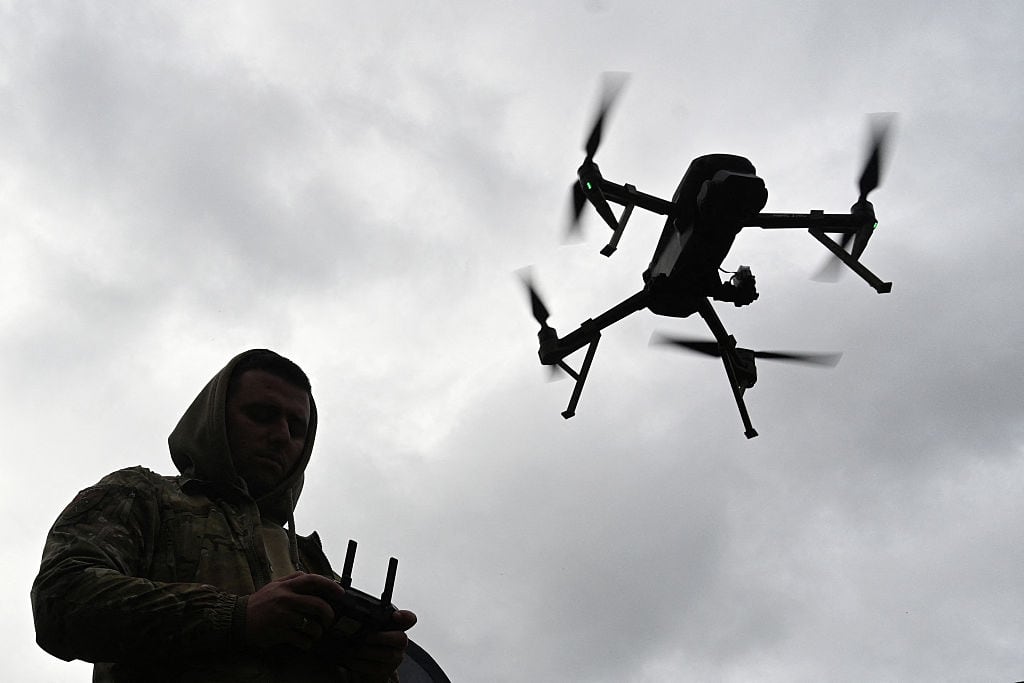
A Ukrainian serviceman operates a drone. The Russian invasion has accelerated advancements in drone technology for both sides. (Yuriy Dyachyshyn/AFP/Getty Images)
The fleet was initially scheduled to start arriving this year, but the timeline was extended to allow for modifications “to enable operation at high northern latitudes, including in the Arctic,” as per a statement from the Department of National Defence to CBC News in 2023.
Moreover, the Reaper required additional testing and qualification efforts to confirm its suitability for operation and maintenance during the severe Canadian winters.
Transport Canada has recently acquired an Israeli-manufactured Hermes 900 Starliner drone for Arctic surveillance from Elbit Systems Ltd., but the department’s core aviation services are being integrated with the Defence Department. The specifics regarding its deployment remain uncertain.
-
The Canadian drone industry is spinning up — with lessons from Ukraine
-
Canadian military buying armed drones for $2.49B
The CEPA report emphasized the necessity for Canada and the United States to tackle the drone gap in the North.
It pointed out that “the North American Aerospace Defense Command (NORAD)’s radar networks are becoming outdated, and their modernization will take two decades to finish, leaving the Arctic approach to North America exposed to emerging threats during a time of intense competition.”
While the report does not highlight any specific Arctic ally, it acknowledges that the recent addition of Finland and Sweden to NATO provides an opportunity to create a cohesive northern front.
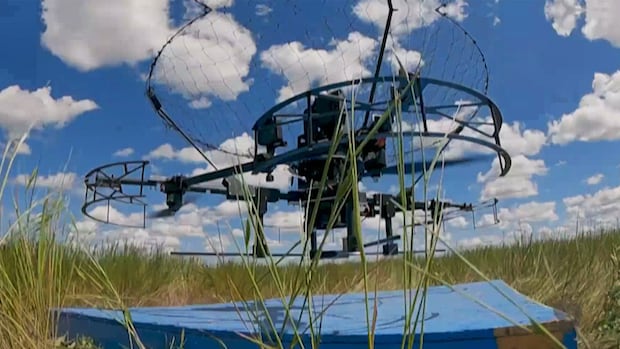
Canada’s government and military are attempting to gain a competitive advantage in a new arms race for drones by issuing industry challenges and testing various technologies, including marine drones capable of attacking ships and lasers designed to disable drones mid-flight.
“Significant discrepancies exist between current NATO drone inventories and the unique requirements of Arctic operations,” the study indicated.
“Only a limited number of vehicles are winterized or designed for sustained operation in the extreme conditions of the region.”
The report urged allies to consider developing enhanced cold-rated batteries, efficient thermal-management systems, and prepositioning spare parts that are vital for maintaining high sortie rates in severe weather across northern bases.
On a broader strategic level, the report emphasized that NATO must take the surveillance gap more seriously.
“To start, NATO lacks an official Arctic strategy,” the CEPA report highlighted.
“Although this is a delicate policy issue, the absence of a dedicated strategic framework for the region could undermine resource allocation and collaboration among regional allies at multiple levels.”