

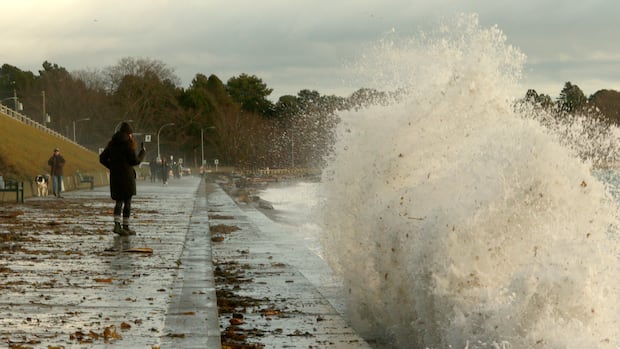

A massive underwater wave associated with this year’s El Niño phenomenon is traveling along the western coastline of the Americas, prompting concerns among researchers regarding how climate change is amplifying the effects of this naturally occurring event.
Known as a Kelvin wave, its arrival is anticipated. However, similar to El Niño itself, it occurs against the backdrop of anthropogenic climate change, which has already elevated ocean and atmospheric temperatures.
Earlier this summer, a smaller wave arrived in British Columbia, and scientists predict the next one will reach the region in about one to two weeks, according to Bill Merryfield, a research scientist with Environment and Climate Change Canada.
“In June, we observed over 30 centimeters in some areas. The upcoming wave appears to be even stronger,” Merryfield stated.
What triggers it?
The Kelvin wave is a naturally occurring weather event, akin to El Niño itself. In typical years, winds blow east to west across the equator in the Pacific Ocean, generally moving water from South America toward Asia.
However, during El Niño years, these east-to-west winds may weaken or even reverse, allowing water to flow eastward.
“When these Kelvin waves hit the South American coast, there’s no further east for this accumulation of water to go. It splits and starts moving along the coastlines of the Americas,” Merryfield explained, eventually reaching Canada.
Data from sea-level monitoring in Tofino, located on Vancouver Island’s Pacific coast, illustrates the effects of the earlier Kelvin wave from June.
Instead of resembling a massive tsunami, the Kelvin wave leads to a temporary increase in sea levels.
“You can visualize it as a vast, hundreds of miles wide, yet shallow elevation in the ocean surface, raising it by about a foot,” commented Daniel Swain, a climate scientist at the University of California, in an interview with CBS News last month.
What effects will it have on the West Coast?
Merryfield noted that the effects are most significant during king tides, which are exceptionally high tides caused by the gravitational forces of the sun and moon aligning to create higher-than-usual tides.
“When you add that 30 centimeters of sea-level rise on top of a king tide, and then potentially factor in a winter storm that leads to a storm surge, that’s when you really start encountering serious issues,” he remarked.
“This additional foot or so of sea-level rise from El Niño can have considerable consequences.”
The unprecedented global heat driven by this year’s potent El Niño may result in nearly half a million additional fatalities worldwide by the end of February, as reported by a study that also emphasizes climate change’s role in exacerbating extreme heat.
These surges could be further amplified by another El Niño effect, which raises sea levels along the B.C. coast. El Niño can enhance northward winds along the coast, driving even more water toward the shore.
The cumulative impacts — the Kelvin wave, intensified northward winds, and winter storms, combined with climate change that is already elevating sea levels and intensifying extreme weather — could exacerbate flooding and erosion along the coastline. Historical strong El Niños have led to significant erosion on California’s beaches.
Local officials in California are applying emergency sand to beaches and anticipate that the Kelvin wave will elevate water levels by six to twelve inches, as reported by the Associated Press.
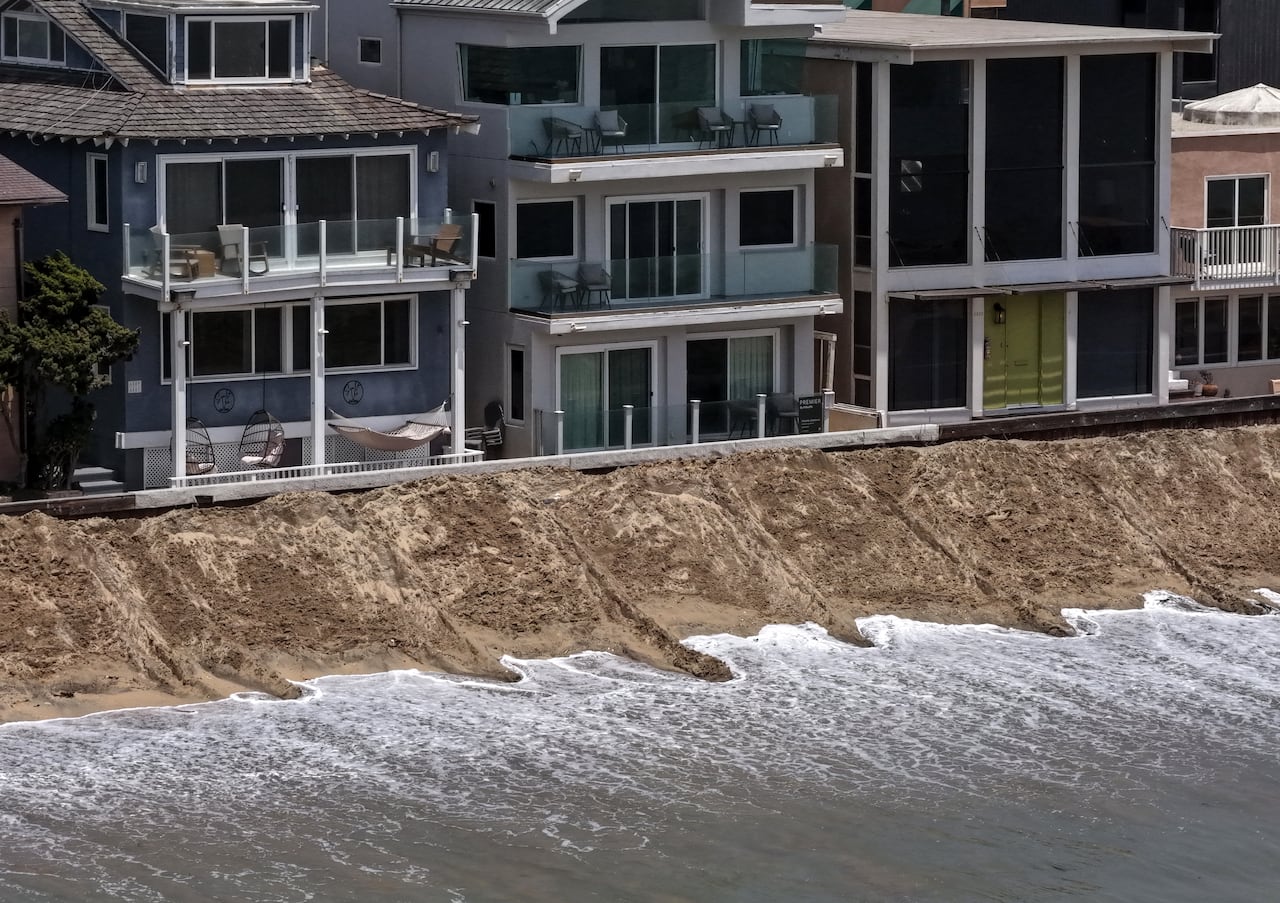
Exceptionally high king tides and powerful waves damaged protective sand and wooden berms in Long Beach, California in June. (Justin Sullivan/Getty Images)
The consequences of the Kelvin wave — and El Niño in a broader sense — may extend well beyond this season, Merryfield cautioned.
Oceans absorb a significant portion of the excess heat trapped by greenhouse gases, thus alleviating global warming as humans continue to rely on fossil fuels. Yet, during El Niño events, some of that stored heat is released back into the atmosphere from the ocean.
This could likely result in 2027 being recorded as the hottest year ever “by a considerable margin,” Merryfield warned, aligning with similar alerts from other climate research organizations and scientists.