

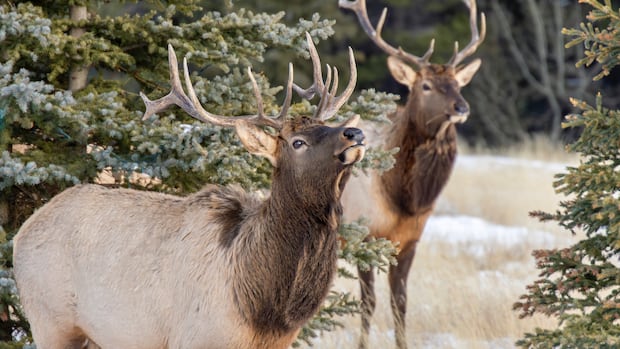

Amidst vibrant orange larches, a sharp call resonates throughout the Bow Valley.
As the autumn mating season begins, male ungulates throughout North America are vying for the chance to breed.
This includes elk, commonly spotted across various regions of Alberta. During this season, it’s typical to observe — and hear — bull elk attempting to establish their supremacy in the Canadian Rockies.
While that distinctive bugle sound may be equally startling to human listeners across the continent, studies from the United States indicate that elk in different regions might be using varying dialects to communicate.
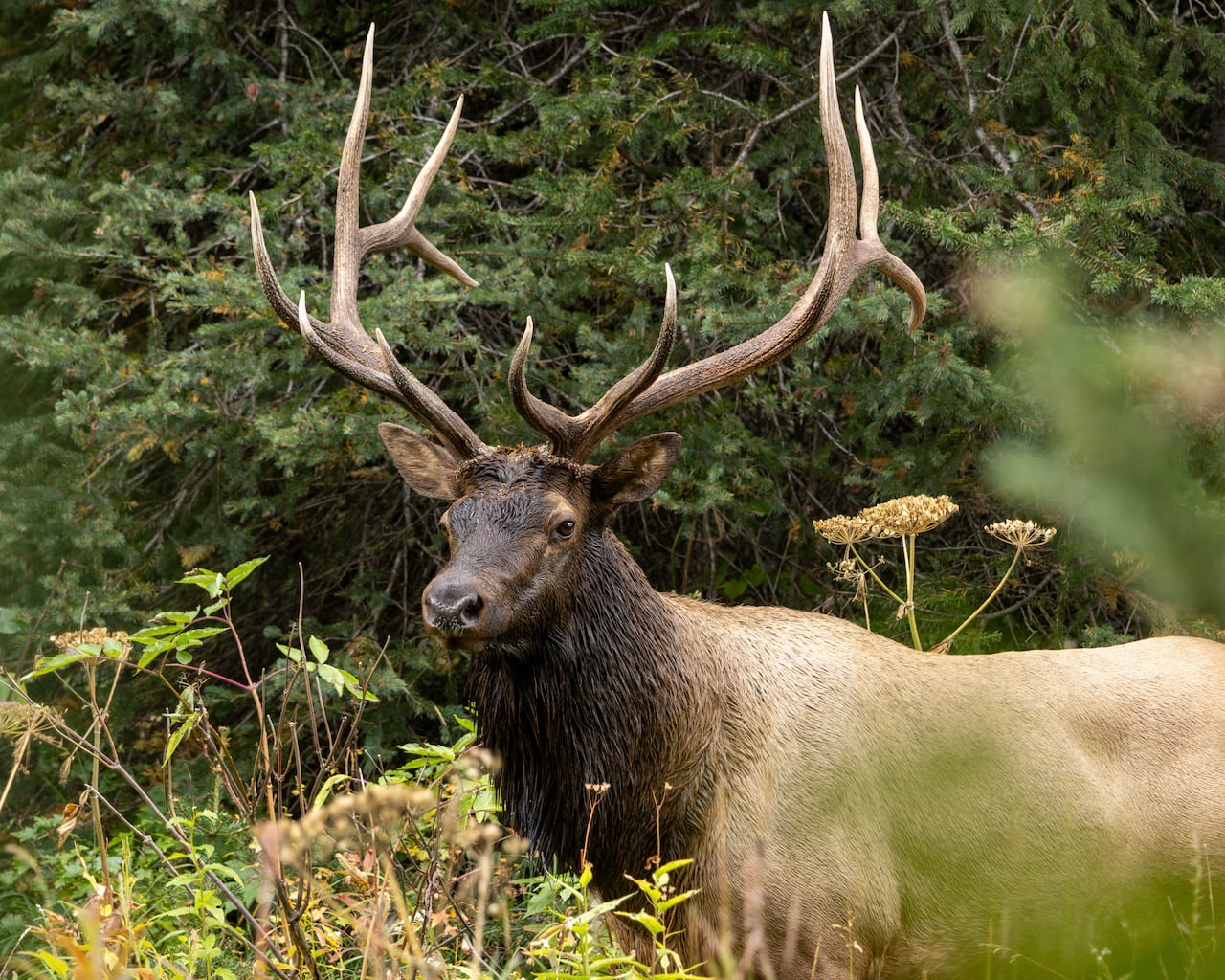
A bull elk in Yoho National Park, British Columbia. (Amir Said/CBC)
Jennifer Clarke, a biology professor at the University of La Verne in California and the study’s lead author, shared her results after analyzing elk populations in Colorado, Pennsylvania, and Wyoming.
“These three groups have been isolated for extended periods,” Clarke told CBC’s Calgary Eyeopener.
“Just as human communities that lack interaction over time develop unique communication styles, the same phenomenon is observed with elk.”

Exploring why elk in Colorado, Wyoming, and potentially Alberta have their own regional dialects during mating season.
Bull elk bugle to signal their presence to other males. According to Clarke, this bugling serves as a clear display of aggression, signaling their readiness to confront any challenger.
Furthermore, Clarke notes that bugles can reflect an elk’s age and size, with younger bulls often producing a more “squeaky” sound compared to the deep calls of dominant older males.
However, the precise cause of these regional dialects remains uncertain.
Clarke and her team initially hypothesized that the differences might arise from the various habitats of the elk populations in the states she examined.
“Sounds travel differently in various environments,” she explained. “In dense vegetation, sounds may not carry as well unless certain conditions are met. In open areas, different sounds can propagate more effectively.”
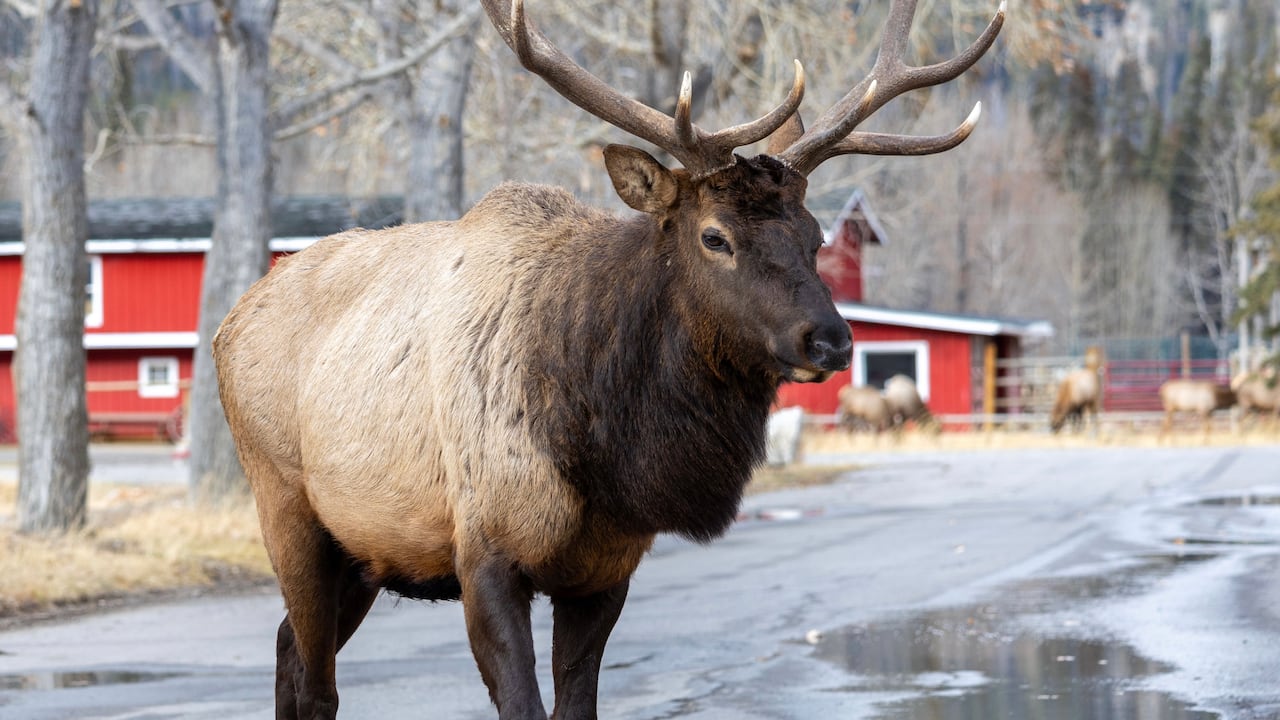
A bull elk crossing the road. In 2025, elk accounted for 138 of the 7,449 reported roadkill incidents in Alberta according to the provincial government’s Wildlife Watch. (Amir Said/CBC)
They anticipated that the elk population in Pennsylvania, residing in a thick deciduous forest, would utilize lower-pitched and longer calls to enhance sound transmission. In contrast, the more open and arid coniferous forests and meadows of Wyoming and Colorado were expected to yield similar bugle sounds.
However, the results did not confirm this expectation.
The bugle calls from the Pennsylvania elk population were not significantly more distinct from their Wyoming counterparts than the Wyoming elk were from those in Colorado. All three populations exhibited unique vocalizations, indicating that habitat was not the determining factor in dialect variations.
“This suggests that genetics or learned behaviors could be at play,” Clarke remarked. “These require separate studies to explore.”
- Sperm whale groups identified with distinct cultures and dialects
- Scientists are leveraging AI to decode animal communication, akin to real-life Dr. Dolittle scenarios
Clarke noted that genetic factors might contribute, but much remains to be uncovered.
“Our findings suggest that the Pennsylvania population has very low heterozygosity, indicating that the elk there are genetically more similar to each other compared to those in Wyoming or Colorado,” she explained.
This lower genetic diversity among Pennsylvania elk results in their calls sounding more alike.
Conversely, elk calls in Colorado and Wyoming show greater variation within their populations.
Regarding whether Canadian elk exhibit different sounds, Clarke stated, “I cannot provide an answer. Our initial assumption was based on habitat, which has proven incorrect. Thus, I cannot even speculate.”
Caution urged as rut season begins in Alberta
As the elk rut season unfolds in the Canadian Rockies, authorities are advising caution due to the aggressive and unpredictable nature of bull elk at this time.
A study examining over two dozen Canadian national parks revealed that elk were involved in nearly two-thirds of aggressive wildlife interactions.
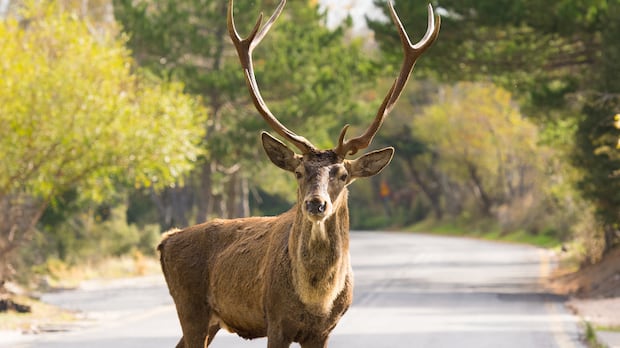
This recent research sheds light on factors contributing to aggressive wildlife interactions in Canada’s national parks. As reported by CBC’s Michelle McCann, the findings indicate that risky human behavior is rarely a factor, with a common animal posing the greatest risk.
Nick de Ruyter, program director of the BioSphere Institute’s WildSmart initiative, pointed out that elk are frequently observed in fields, playgrounds, trails, and other public areas in Banff and Canmore.
Since these are places where both locals and tourists congregate, the chances of close encounters with elk increase.
“During this season, male elk exhibit heightened aggression towards anything that approaches too closely,” de Ruyter noted. “This includes vehicles, bicycles, dogs — both on and off-leash — and people, so it’s essential to give them ample space.”
- ‘Highly aggressive and protective’: Elk calving season has commenced in Alberta
- Banff’s elk population has decreased since the 1990s, which is beneficial for the national park’s ecosystem
He emphasized that individuals sometimes provoke aggressive responses or attacks by getting too close to elk for photographs or selfies.
“The best approach is to maintain distance,” de Ruyter advised. “Typically, we recommend a space of 30 meters, or three school bus lengths, for elk, but during the rut and calving seasons, I would increase that to 100 meters, or ten school bus lengths, because their reactions can be unpredictable.”
He also urged individuals on Bow Valley trails to remain vigilant of their surroundings, keep dogs leashed, and carry bear spray, which is effective against elk as well.