

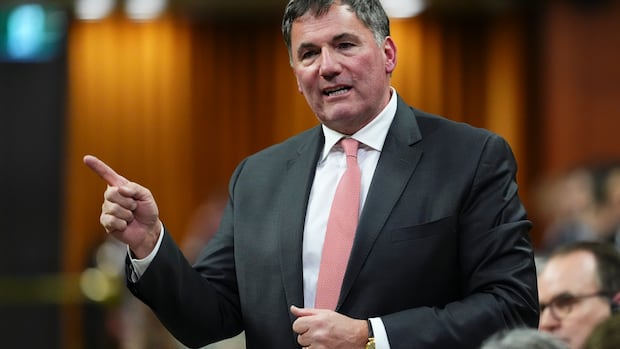

Dominic LeBlanc, the Trade Minister of Canada, has indicated that American officials are welcome to resume discussions regarding trade with Canada. However, the next opportunity for direct dialogue on trade is expected to arise when the review process for the North American Free Trade Agreement commences next month.
LeBlanc mentioned on Sunday morning, “Should there be a chance in those discussions for the Americans to agree on something beneficial for both their interests and Canada’s economy, we are fully prepared to engage in that work.”
Officials from Canada, the U.S., and Mexico are preparing to assess the Canada-U.S.-Mexico Agreement (CUSMA), which provides essential safeguards for Canada against many tariffs imposed by U.S. President Donald Trump.
Notwithstanding the trade agreement, Canadian exports of steel and aluminum are still facing tariffs of 50 percent from the U.S., alongside certain automotive exports and kitchen cabinets which are subjected to a 25 percent tariff.
Discussions aimed at reducing these steel and aluminum tariffs were taking place, but Trump halted them in October, responding to an anti-tariff advertising campaign initiated by the Ontario government.
LeBlanc expressed that Canada felt it was making headway with the U.S. and that negotiations would eventually extend to matters involving automobiles and softwood lumber, but Trump “opted to pause those discussions. That is unfortunate.”
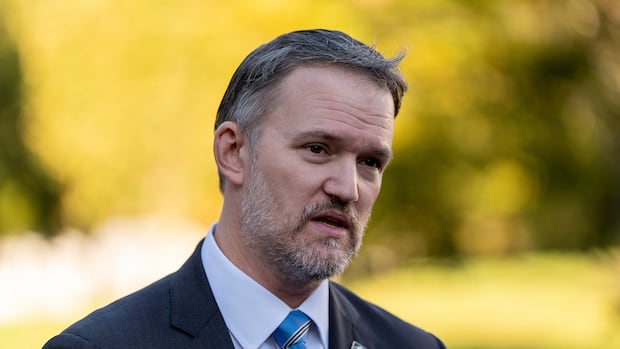
According to Jamieson Greer, the lead trade negotiator for U.S. President Donald Trump, the administration is contemplating the possibility of separating the three-way free trade agreement with Canada and Mexico, opting instead for individual agreements.
LeBlanc remarked, “It would have significantly benefited the Canadian economy if we could have reached an agreement favorable to Canadian workers and businesses.”
Regarding the forthcoming CUSMA review, it remains uncertain whether the U.S. intends to uphold the trilateral agreement or pursue separate bilateral negotiations with Canada and Mexico, as suggested by some American officials.
-
Trump administration won’t tear up CUSMA, says Canada’s ambassador to U.S.
-
Trump’s point man on trade floats separate deals with Canada and Mexico
On Thursday, Canada’s ambassador to the U.S., Kristen Hillman, played down indications from the Trump administration regarding the potential dissolution of the trilateral agreement, asserting that she hasn’t “detected any signals from the U.S. indicating a desire to alter that framework.”
Hillman stated, “I don’t perceive this as a cause for concern. A stable, predictable, open, and manageable trade relationship among our three nations is crucial for the prosperity of all involved. This gives me confidence that this treaty will endure.”
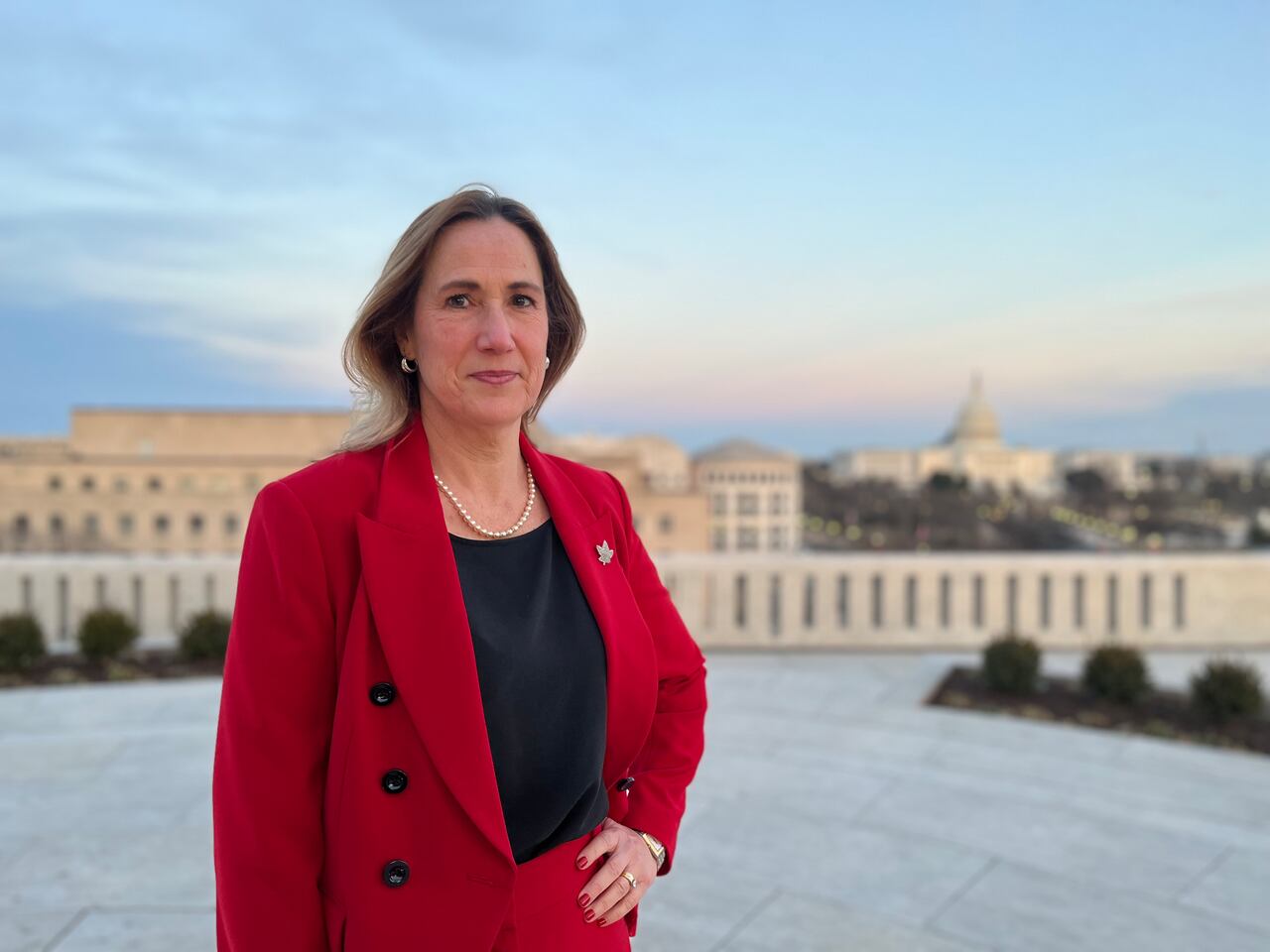
Kirsten Hillman, Canada’s ambassador to the U.S. and chief trade negotiator with Washington, states she hasn’t heard any indication from the Trump administration about altering the fundamentals of the Canada-U.S.-Mexico Agreement. (Jennifer Chevalier/CBC)
By July 1 of the coming year, all three nations must declare whether they wish to extend the agreement, renegotiate its terms, or allow it to lapse.
According to U.S. law, Jamieson Greer, the chief trade negotiator for Trump, is required to submit a report to Congress by January 2 outlining the administration’s strategy for the trade agreement.
At any point, a country may announce its intent to withdraw from CUSMA by providing six months’ notice.
LeBlanc acknowledged the public remarks made by U.S. officials but noted that private discussions are “far more encouraging” regarding the expected outcomes of the CUSMA review.
“This is not a renegotiation; it’s a review. We are hopeful that the U.S. maintains its stance,” LeBlanc stated.
Poilievre critiques Carney over trade discussions
In a conversation with CBC’s Rosemary Barton on Sunday morning, Conservative Leader Pierre Poilievre criticized Prime Minister Mark Carney’s approach to Canada-U.S. trade discussions, asserting that Carney had positioned himself as the most suitable individual for the task — yet he has failed to fulfill that promise.
When questioned about his alternative approach, Poilievre emphasized the necessity for Canada to negotiate from a position of strength, which involves approving natural resource projects to facilitate greater oil and gas exports to foreign markets, thereby reducing dependence on the U.S.
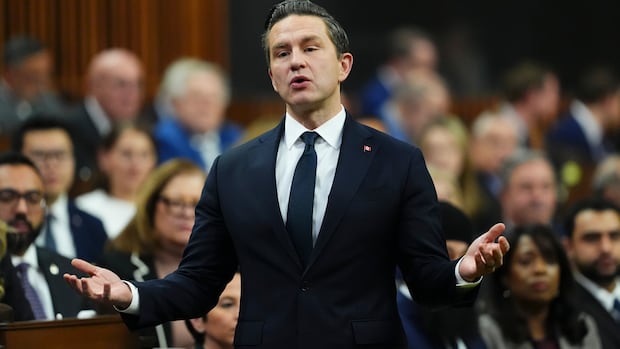
CBC News chief political correspondent interviews Conservative Party Leader Pierre Poilievre regarding his leadership after Michael Ma’s switch to the Liberals. They also discuss the Ottawa-Alberta agreement that lays the groundwork for a new oil pipeline.
“Then you can approach the president and explain, ‘Now we are selling our resources to the Asians and Europeans,'” Poilievre remarked. He further accused the Liberal administration of hindering those projects.
In response to Poilievre’s comments, LeBlanc stated that the federal government has an agreement with Alberta’s government that outlines a pathway for an oil pipeline to British Columbia, contingent upon Alberta enhancing its industrial carbon tax among other factors.
LeBlanc remarked, “We believe that there is a viable way for the pipeline to be economically, environmentally, and socially justifiable. However, it will require significant effort from all parties involved.”
He added, “As a nation, we cannot adopt a neutral stance regarding the responsible economic success of the energy sector in Western Canada.”