

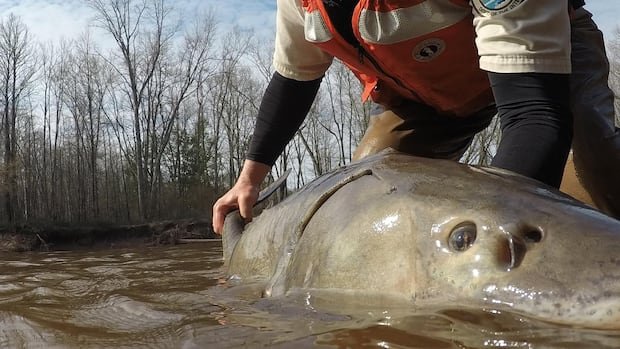

Lake sturgeon in the Great Lakes may have been swimming around since Samuel de Champlain first reached Lake Huron over 400 years ago, according to new research. These ancient-looking fish, capable of living for more than 400 years, are facing endangerment. In Ontario, lake sturgeon are considered a species at risk and are endangered specifically in the Great Lakes due to overfishing and habitat destruction.
The study, utilizing over four decades of data from lake sturgeon in the Great Lakes, suggests that the recovery of these fish may take longer than initially anticipated. Ed Baker, a fisheries scientist leading the study, mentioned that lake sturgeon could potentially live up to 400 years, contrary to traditional estimates of 150 years. Determining a sturgeon’s age is challenging, as growth rings in their fin ray become harder to distinguish as they age.
Instead of counting growth rings, researchers used capture data spanning 44 years to calculate individual sturgeon growth rates. This method revealed that some sturgeon could take centuries to reach full size, surprising scientists with the findings. Trevor Pitcher, a biologist at the University of Windsor, emphasized the need to reevaluate conservation efforts for sturgeon, considering their potential centuries-long lifespan.
Pitcher highlighted the essential role of sturgeon in the ecosystem, particularly in controlling invasive species such as quagga mussels and gobies. He stressed the importance of adapting conservation strategies to accommodate the longevity of sturgeon populations. The work of conservationists, including training programs to raise sturgeon populations, aims to restore sturgeon numbers around the Great Lakes.
Perry McLeod-Shabogesic, an elder from Nipissing First Nation, described sturgeon as revered elders in Anishinaabe tradition due to their long lifespan and historical significance. These ancient fish, once abundant in the Great Lakes, have witnessed significant changes over generations. McLeod-Shabogesic highlighted the unique position of sturgeon as beings that exist “in between,” embodying a distinct role in the ecosystem.
An old Nipissing story shared by McLeod-Shabogesic depicted the mystique surrounding sturgeon, portraying them as creatures that transcend traditional categories. The tale underscored the spiritual significance of sturgeon in indigenous teachings, emphasizing their unique attributes and connection to the natural world. The newfound understanding of sturgeon’s potential lifespan resonated with indigenous knowledge, validating long-held beliefs about the significance of these ancient fish.