

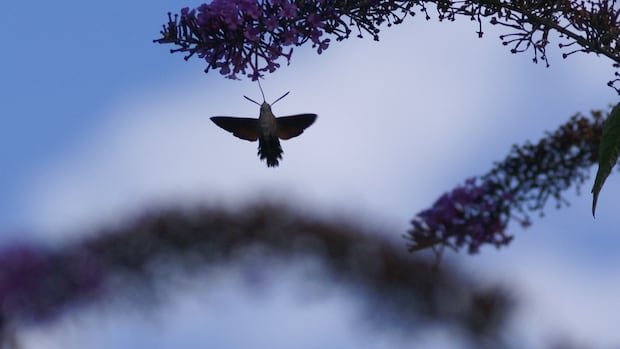

Many individuals have fond memories of summer nights filled with moths and mayflies buzzing around porch lights or road trips leaving car windshields covered in insects. However, there is a growing concern that these experiences are changing.
Recent scientific studies confirm a decline in insect populations in Canada and globally, impacting various ecosystems and species, including birds, bats, fish, plants, and humans.
Research conducted by Hadil Elsayed, a PhD student at York University in southern Ontario, revealed a significant drop in insect mass collected at two protected sites compared to the 1990s. Similarly, a citizen-science project in the U.K. showed a notable decrease in flying insects based on splatter data on license plates. Multiple global studies also highlight the decline in insect populations.
Elsayed’s meticulous insect trapping between 2021 and 2023 at Long Point National Wildlife Area and St. Williams Conservation Reserve demonstrated a nearly 50% reduction in total trapped insect mass over the past three decades. These findings align with a study by researchers at the University of Michigan and Birds Canada, which reported a 62% decline in flying insects at Long Point Bird Observatory from 1977 to 2011.
The collected insects, primarily tiny midges, play a crucial role as a food source for various wildlife. The decline observed by Elsayed equates to approximately 640 million midges lost, emphasizing the severity of the situation.
The diminishing insect populations have broader implications beyond their own survival. Andrew Whitehouse, a conservationist at Buglife in England, emphasized the importance of common insect species in ecosystem functions such as pollination and decomposition. Various studies have highlighted the potential extinction risk facing insect species globally due to factors like habitat loss, invasive species, pesticides, pollutants, and climate change.
Furthermore, the decline in insect populations has already started impacting other species, such as insect-eating swallows becoming smaller and scarcer due to reduced food availability. Insects play a vital role in pollination, pest control, and sustaining the food chain, affecting humans, animals, and plants alike.
Efforts to reverse insect declines include planting native vegetation, preserving habitats, and reducing pesticide usage. While the situation appears alarming, success stories in insect population recovery offer hope, suggesting that conservation measures and environmental initiatives can make a positive impact.
Ultimately, raising awareness and taking collective action are crucial in safeguarding insect populations and preserving the intricate balance of nature that these tiny creatures contribute to.