

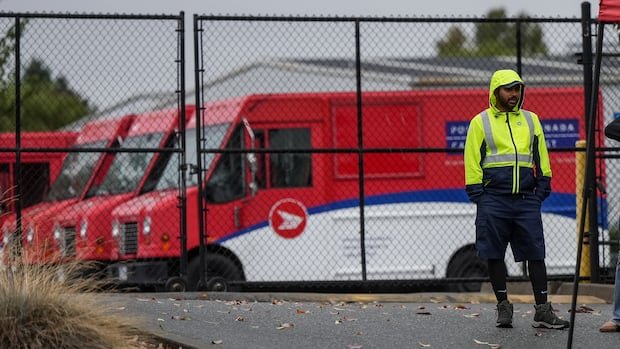

After over a month of rotating strikes by Canada Post workers, there is a sense of uncertainty among employees and businesses that rely on the national postal service. Toronto postal worker Helen Karrandjas expressed frustration while awaiting a resolution, emphasizing that it’s currently “business as usual” for workers. She acknowledged that the impact of the strikes has been minimal on operations but recognized that the unpredictability might be unsettling for customers during the busy holiday shopping season.
The ongoing rotating strikes have largely spared major urban areas, allowing most Canadians to continue sending mail and parcels without significant disruptions. Karrandjas mentioned that workers monitor the Canadian Union of Postal Workers (CUPW) website daily to track strike locations. Despite the ongoing strike actions, she feels that the workers lack leverage in the negotiation process.
CUPW initiated a nationwide strike in late September following the federal government’s announcement of significant changes to Canada Post. These changes included granting the authority to end home delivery for millions of addresses and lifting a moratorium on closing rural post offices. The rotating strikes commenced on October 11, with most mail services being restored, albeit with some disruptions in flyer deliveries in parts of Quebec and Ontario.
The Retail Council of Canada highlighted concerns about the inconsistent application of the rotating strikes, leading to variability in deliveries across the country. This has resulted in unreliable service, causing frustration for retailers and consumers alike. Despite the shift to rotating strikes, service remains severely limited on the ground.
Negotiations between CUPW and Canada Post resumed on October 30 after a prolonged hiatus. The two parties have been engaged in discussions for over a year and a half to reach a new collective agreement. Previous labor disputes have lasted for extended periods, with government intervention required to resolve conflicts.
The financial challenges facing Canada Post, including consecutive years of losses and a significant government loan to sustain operations, have added complexity to the ongoing labor dispute. The corporation’s financial situation has prompted discussions about potential layoffs and restructuring to address cost issues. However, the union remains steadfast in its focus on securing job security and favorable terms for workers in the negotiations.
Despite the challenges and uncertainties, both CUPW and Canada Post are committed to finding a resolution that ensures stability for employees and the postal service. The potential impact of layoffs and operational changes looms over the negotiation process, emphasizing the need for a balanced agreement that addresses the concerns of both parties.