

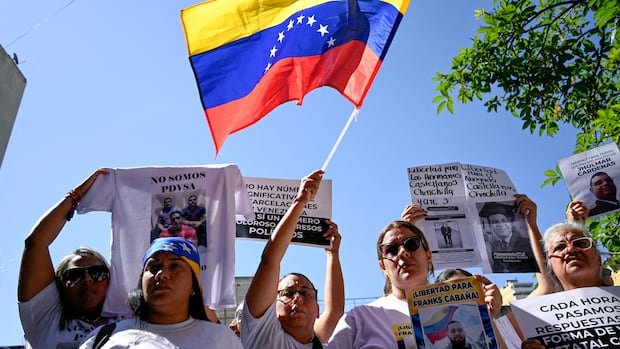

In Venezuela, a student leader, Miguelangel Suarez, made a bold move by confronting acting President Delcy Rodriguez, demanding the release of hundreds of young political prisoners. This incident gained international attention due to the country’s authoritarian reputation. Since the capture of former President Nicolas Maduro by the United States, some Venezuelans have become more assertive in challenging the new government, while others remain cautious about the longevity of any democratic progress.
Rodriguez, who assumed power after Maduro’s capture, has initiated steps towards reforms by approving an amnesty law that could potentially pardon political prisoners. Despite the release of around 350 political prisoners, Foro Penal reports that 680 individuals are still detained. The government claims over 800 have been freed since December.
The encounter between Suarez and Rodriguez symbolizes a pivotal moment in Venezuela, where citizens are testing the boundaries of political expression. Some, like history teacher Jesus Piñero, have started openly discussing politics, marking a shift from the previous climate of fear and repression. While some forms of activism are being tolerated, red lines have been drawn by the authorities, as seen in the crackdown on celebrations following Maduro’s capture.
The emergence of previously hidden opposition figures, like Delsa Solorzano, signals a new phase in Venezuelan politics. Rodriguez has described this as a “new political moment,” but concrete measures to safeguard freedom of expression and dissent are yet to be fully realized. The release of political prisoners and their increasing vocalization hint at a potential democratic opening, although sustained efforts are needed to ensure lasting progress.