

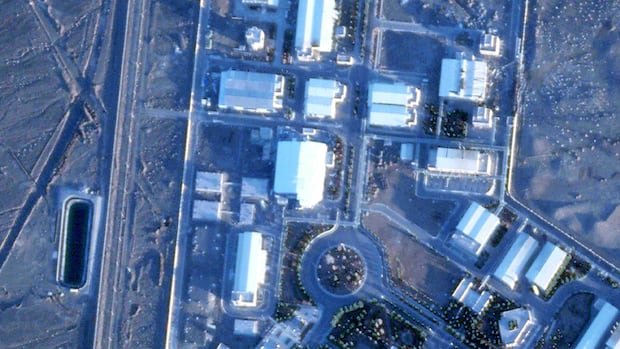

Recent satellite imagery indicates that Iran may be engaged in recovery operations at two nuclear sites previously targeted by Israel and the U.S. While efforts to salvage materials are underway, experts note that there has been no significant progress in Iran’s nuclear program following the attacks.
According to Joseph Rodgers, a deputy director and fellow at the Center for Strategic and International Studies (CSIS), there is minimal activity at the sites, with no substantial signs of nuclear program advancement. New satellite images reveal the construction of roofs over damaged buildings at the Isfahan and Natanz facilities, marking the first visible activity since the conflict in June.
The Natanz facility, a crucial site for Iran’s uranium enrichment, has seen developments such as covering the anti-drone cage with a roof to conceal ongoing activities. Spencer Faragasso, a senior fellow at the Institute for Science and International Security, suggests that Iran may be searching for surviving materials like highly enriched uranium.
At the Isfahan site, known for producing uranium gas for centrifuge enrichment, increased vehicle activity near tunnel entrances has been observed. Faragasso speculates that Iran’s actions may aim to recover equipment for potential enrichment rebuilding efforts.
Despite reconstruction efforts, the extent of the damage suggests that Iran’s nuclear program has been significantly impaired. Joseph S. Bermudez Jr., a senior fellow at CSIS, highlights that the sites do not appear to be fully operational, emphasizing the setback to Iran’s enrichment capabilities.
While the visible activity above ground is limited, uncertainties persist regarding potential underground operations. Experts caution that satellite imagery may not capture all activities, leaving questions about Iran’s nuclear stockpile and operational status unanswered.
Rodgers mentions Iran’s existing stockpile of highly enriched uranium and the possibility of a third enrichment site near Isfahan. The current state of these facilities remains unclear, with uncertainties surrounding their operational readiness or construction progress.