

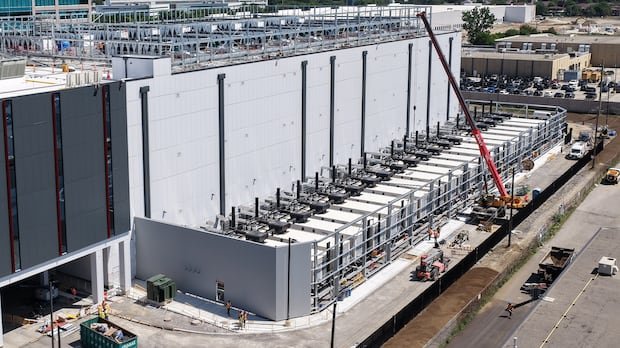

Ontario Premier Doug Ford unveiled a new data center framework for the province, emphasizing the importance of keeping Canadians’ data within Canada. The framework is built on three main pillars: economic development, data protection and sovereignty, and community investment and public confidence.
Ford highlighted that the government aims to stimulate economic growth, increase tax revenues, and create numerous job opportunities through the implementation of the new data center playbook. The framework mandates that data centers cover the entirety of their electricity usage costs and encourages the development of power generation projects within their infrastructure.
In a bid to support its artificial intelligence (AI) strategy, the province expects substantial economic benefits amounting to $122 billion in growth by 2035, along with the creation of 17,000 new jobs annually.
The announcement coincides with deliberations by municipalities across Ontario on imposing moratoriums on data centers. Oakville recently enacted a one-year moratorium, while Mississauga is set to vote on a similar measure in September.
Green Party leader Mike Schreiner has called for a pause on data center approvals, expressing concerns about corporations benefiting from local resources at the expense of communities. The need for stringent regulations, particularly on water usage, has been emphasized by various groups and residents.
Ontario’s Economic Development Minister, Vic Fedeli, assured that data centers employing closed-loop systems will be given priority. Such systems, akin to car radiators, recycle water to minimize consumption.
Despite the government’s efforts, the Green Party believes the playbook lacks robust regulations to safeguard communities. They advocate for a moratorium until stringent measures are in place to protect against potential negative impacts of data centers.
In a separate development, Waterloo region is examining the local implications of data center expansions. Coun. Colleen James proposed an information report to inform elected officials about the development and impacts of data centers in the region. The report is expected to be finalized early next year.