

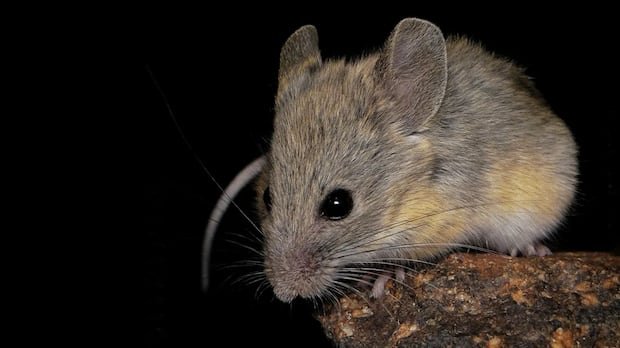

On the peak of a 6,739-meter Andean volcano, where the air is thin, temperatures are consistently below freezing, and humans struggle to endure, a small leaf-eared mouse has established its habitat by consuming toxic plants. An international research team, which included scientists from McMaster University in Hamilton, Ontario, has revealed some of the biological mechanisms behind this phenomenon. The study, reported in the journal Science, discovered that Andean leaf-eared mice at high altitudes can efficiently generate heat in low-oxygen environments. Genetic evidence also indicates their adaptation to process harmful substances in their diet.
The species, known as Phyllotis vaccarum, has been spotted on the summit of Volcán Llullaillaco, situated on the border between Chile and Argentina. At this elevation, each breath provides only about 44% as much oxygen as at sea level. Grant McClelland, a biology professor at McMaster and co-author of the study, expressed his astonishment at the fact that these mice not only live but thrive in such harsh conditions.
These mice have the widest known elevation range of any mammal, inhabiting areas from sea level along Chile’s northern coast to Andean peaks exceeding 6,700 meters. Researchers collected mice from various elevations, analyzed their genomes, and conducted tests under controlled laboratory conditions. Heat production was measured at oxygen levels simulating sea level, 4,300 meters, and 7,000 meters. Despite all mice experiencing reduced heat production as oxygen levels decreased, the highland mice exhibited a lesser decline compared to lowland counterparts, potentially offering a life-saving advantage in freezing temperatures.
The highland mice seem to benefit from the efficiency of their muscles in producing and utilizing energy, crucial for maintaining body temperature in cold environments. Mitochondria in their muscles showed a greater ability to convert oxygen and nutrients into energy compared to lowland mice. Mitochondria, the energy-producing structures in cells, were found to be more abundant in highland mice and had high lipid fuel utilization capacity, crucial for sustained energy supply during shivering.
Moreover, the study highlighted the mice’s dietary challenges due to the scarcity of vegetation on the highest slopes. Genetic analysis uncovered adaptations in detoxifying genes, aiding in processing harmful plant compounds. This resilience of small mammals surviving at nearly 7,000 meters serves as a stark reminder that life can thrive in unexpected environments, challenging scientists’ understanding of evolution and adaptation.