


Thousands of cartons containing essential supplies and food are currently unused in Jordan, Egypt, and Israel, according to humanitarian organizations. They express concern that minimal aid is reaching Gaza despite a ceasefire agreement between Hamas and Israel nearly four weeks ago.
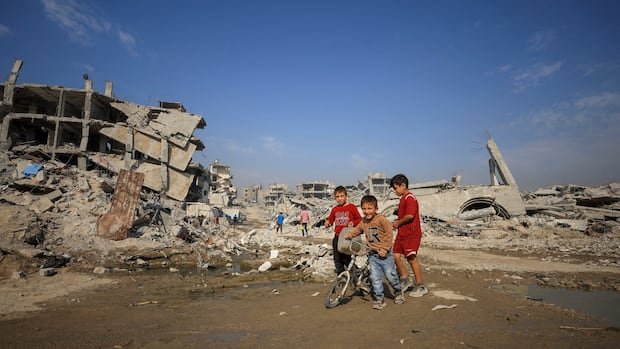
With winter approaching, hundreds of thousands of individuals in Gaza still reside in dilapidated makeshift tents, lacking proper shelter following Israel’s destructive two-year offensive in the densely populated enclave.
Angelita Caredda, the Middle East and North Africa Regional Director for the Norwegian Refugee Council (NRC), emphasized the urgent need to shield families from the upcoming harsh weather conditions. Caredda stated that Gaza requires a substantial influx of shelter materials, yet only a small portion of the necessary supplies has been delivered.
NRC, leading a coalition of agencies addressing the shelter shortage in Gaza, reported that since the ceasefire on October 10, Israeli authorities have denied 23 requests from nine aid groups to bring in crucial shelter items such as tents, bedding, kitchen sets, and blankets.
“It is imperative that families are not left exposed to the elements during winter,” Caredda stressed, highlighting the life-threatening risks faced with each passing day of delay.
Furthermore, millions of shelter and non-food items are stuck in neighboring countries awaiting approvals, leaving approximately 1.5 million people vulnerable to deteriorating conditions in Gaza.
Despite the ceasefire deal aiming to facilitate aid deliveries and food distribution, challenges persist. Manal Salem, a resident of Khan Younis in southern Gaza, voiced concerns about inadequate supplies, emphasizing the dire need for proper shelter, water, and food.
Gaza’s local administration, historically under Hamas’ control, cited ongoing obstacles preventing the majority of aid trucks from reaching their intended destinations due to Israeli restrictions, resulting in only a fraction of the required supplies being delivered daily.
The World Food Program (WFP) disclosed that only half the required food quantity is entering Gaza, while a Palestinian agency group collaborating with the UN noted that only 25 to 30 percent of expected aid has arrived thus far.
Israel maintains that it is fulfilling its obligations under the ceasefire agreement by allowing an average of 600 trucks of supplies into Gaza daily. However, allegations persist regarding Hamas’ involvement in food aid mismanagement, which the group denies.
Following the ceasefire and increased aid flow since mid-October, some improvements have been observed, according to the United Nations Office for the Coordination of Humanitarian Affairs (OCHA). Notably, malnutrition rates among children have slightly decreased, yet severe cases persist.
While access to food has improved for half of Gaza’s families, disparities remain between the southern and northern regions. Abeer Etefa, WFP’s senior spokesperson, stressed the urgent need for accelerated aid distribution to address the overwhelming hunger crisis.
Etefa highlighted the limited variety of food available in Gaza, emphasizing the scarcity of essential nutrients like meat, eggs, and vegetables, which are crucial for combating malnutrition.
Additionally, the persistent fuel shortage, including cooking gas, poses challenges to nutrition efforts, with over 60 percent of Gazans resorting to burning waste for cooking, further endangering public health.
The conflict that erupted in October 2023, resulting from a Hamas-led attack on southern Israel, has caused substantial casualties on both sides. Israel’s military response in Gaza has led to significant Palestinian casualties, with continued challenges in aid distribution and ongoing tensions in the region.