

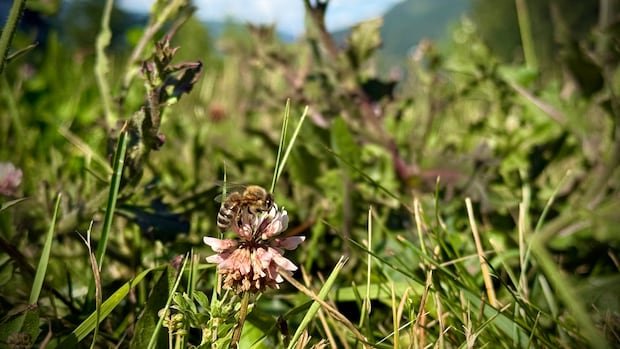

Much of British Columbia (B.C.) encountered a drier spring than usual this year, a condition that experts and beekeepers warn can negatively impact pollinators. Elaine Sedgman, a bee enthusiast and gardener in Kamloops, noted a decrease in native bee activity around her flowers. Sedgman, who volunteers with the BC Native Bee Society, tracks native bee sightings for research purposes.
Wild bee populations across North America are declining, with climate-related events like droughts affecting the plants that pollinators depend on. In B.C., where approximately 500 bee species reside, consecutive years of droughts and heatwaves, including the 2021 heat dome, have raised concerns among experts.
As of the end of June, the B.C. Drought Information Portal reported that 27% of the province was experiencing some level of drought, an improvement from the 40% recorded in May. Ground-nesting bees in B.C. are particularly vulnerable to droughts as dry soil makes nest excavation and maintenance challenging, according to behavioral ecologist Caleb Bryan.
Drought-stressed plants produce less nectar with altered sugar ratios, impacting the food supply for bees. Changes in flower signals under water stress, such as color alterations and weakened scents, can make flowers harder for bees to locate and less appealing. This can hinder bee populations from thriving across seasons.
Emily Huxter, a third-generation bee farmer in the North Okanagan, expressed concerns about potential reductions in honey production due to changes in nectar quality and quantity caused by plant stress. The impact of this spring’s drought on honey production at her Wild Antho bee farm is yet to be determined when the honey flow commences.
To support bee populations, Bryan suggests planting a variety of native flowers that bloom throughout spring, summer, and fall. Ensuring an abundance of flowers is crucial in areas where honey bees and native bees forage to provide sufficient food for both species.