

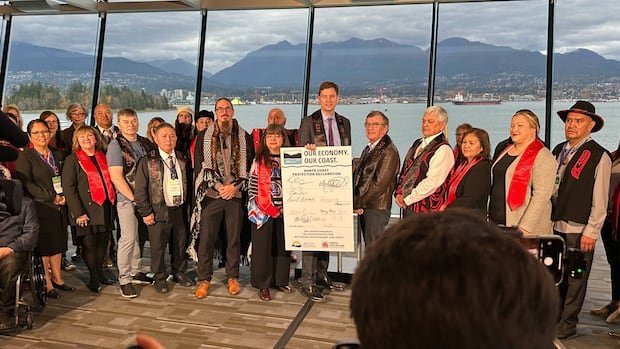

B.C. Premier David Eby, alongside members of various First Nations from B.C.’s northern coast, gathered on Wednesday to endorse and formally sign a declaration requesting Ottawa to uphold a ban on oil tankers in the northern waters of the province.
The North Coast Protection Declaration represents B.C.’s ongoing efforts to prompt the federal government to safeguard the environment and uphold the self-governance of First Nations. This move comes in response to Alberta Premier Danielle Smith’s advocacy for a new private-sector pipeline aimed at transporting crude oil to the northern B.C. coast for export to Asia.
The declaration underlines the potential catastrophic consequences of a crude oil spill in the region, emphasizing the destruction of billions of dollars’ worth of economic activity along the coast and the lasting ecological harm it would cause. Eby firmly expressed that lifting the ban would be illogical.
At the heart of the matter is the region’s ecological significance, with locals stressing the urgent need to preserve its unique ecosystem. Marilyn Slett, president of the Coastal First Nations and chief councillor for Heiltsuk First Nation, emphasized the desire to maintain a way of life intertwined with a healthy, unspoiled ocean.
Eby, Slett, and a coalition of other coastal First Nation leaders united to sign the declaration during the 10th B.C. Cabinet and First Nations Leaders’ Gathering in Vancouver.
The declaration outlines the vital connection between the North Coast’s environment and its economic activities, supporting a sustainable conservation economy that sustains thousands of jobs in fisheries, tourism, renewable energy, and stewardship.
Since 1985, there has been a voluntary exclusion zone over the coastal area, and in 2019, the federal government implemented the Oil Tanker Moratorium Act, prohibiting oil tankers carrying over 12,500 metric tons of crude oil or persistent oil from operating in certain areas of B.C.’s northern waters.
Concerns regarding the potential jeopardizing of this long-standing protection emerged when Ottawa introduced the Building Canada Act in the summer, which enables the fast-tracking of major projects deemed to be in the national interest, potentially bypassing existing regulations.
While some First Nations see the potential for economic reconciliation through a new pipeline to B.C.’s coast, Eby stressed the importance of safeguarding B.C.’s waters from potential threats.
Eby emphasized the need to resist divisive politics that may undermine the national discourse on Canada’s unique economy, highlighting the consensus that has existed for decades along the North Coast.
Trevor Makadahay, chief of Doig River First Nation, expressed openness to the economic benefits of a proposed project, provided environmental safeguards and treaty rights are respected. Ellis Ross, MP for Skeena-Bulkley Valley, reassured that federal processes are in place to ensure consultation with affected First Nations along any proposed project route.
While acknowledging Eby’s concerns, Alberta Premier Danielle Smith’s office emphasized the necessity of a credible proponent and extensive engagement with First Nations for any potential project, urging patience as the process unfolds.