

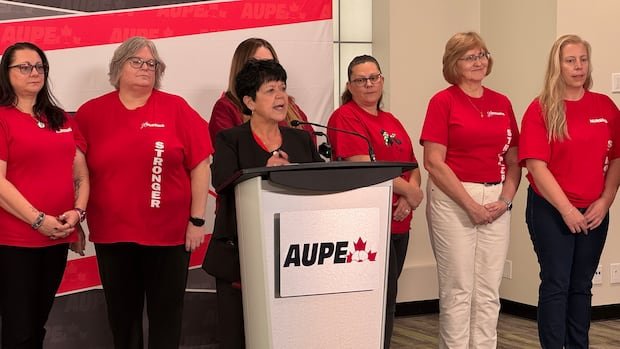

Nursing care staff, members of the Alberta Union of Provincial Employees, have overwhelmingly voted in favor of strike action, with a resounding 98% majority. The voting process, conducted between October 30 and November 3, saw 11,031 members participating in the ballot.
During a news conference in Edmonton on Wednesday, AUPE president Sandra Azocar expressed that the decision to support strike action was primarily driven by concerns over stagnant wages and unsafe working conditions that are negatively impacting both workers and patients in Alberta’s public health care system. The breakdown in talks between AUPE and their employer, Alberta Health Services, as well as the four organizations replacing the former provincial health authority back in April, led to the strike vote.
The 16,000 AUPE members, predominantly comprised of licensed practical nurses and health care aides, may issue a strike notice as early as November 17. While the preference is for members to continue their duties, they are prepared to advocate for their rights and take necessary job action if required, as stated by Azocar.
The potential strike action follows a recent situation where teachers, represented by the Alberta Teachers’ Association, engaged in a three-week strike before being mandated back to work through provincial legislation using the notwithstanding clause to prevent legal challenges.
Reacting to the strike vote results, Alberta’s Finance Minister and President of the Treasury Board, Nate Horner, expressed disappointment. He highlighted the government’s proposal of a 12% wage increase over four years, emphasizing its fairness and alignment with over 87 other public sector settlements.
Horner addressed AUPE’s demands regarding LPN pay parity with registered nurses, noting proposed salary hikes between 40% and 55%, alongside a request for reduced annual work hours. The estimated cost of the proposition exceeds $2 billion, with Horner emphasizing the differing roles and levels of education between LPNs and RNs.
Kate Robinson, lead negotiator for AUPE, highlighted the LPNs’ scope of practice being 84% of that of RNs, yet they are paid approximately 67% of RN salaries. The comparison with Manitoba, where LPNs earn 81% of an RN’s wage, further underscored the wage gap concern in Alberta, positioning LPNs as the seventh-highest paid in Canada.
The upcoming regulation of health care aides as a profession in February adds complexity to the negotiations. Essential services agreements are in place for potential strike scenarios, with existing staffing shortages in some areas presenting challenges.
Political viewpoints were also expressed, with the Alberta NDP Leader criticizing the UCP government for allegedly overlooking workplace safety concerns to leverage the notwithstanding clause. Despite assurances that its use was improbable, Horner stated it remained a possibility, drawing attention to the government’s previous recourse to the clause.
Jason Foster, a human resources and labor relations professor, suggested a potential inclination for the government to utilize the notwithstanding clause again due to past actions and prevailing labor unrest nationwide. Foster attributed the unrest to economic challenges post-COVID-19 and escalating inflation concerns, with lingering discontent from the teachers’ dispute also a factor in Alberta’s public sector.
Overall, the situation reflects a complex interplay of labor negotiations, wage disparities, regulatory changes, and political dynamics within Alberta’s healthcare sector.