


A convergence of two national holidays, the most significant global sports event, and millions of individuals coincides with a scorching heatwave across a vast expanse of North America, encompassing regions like southern Ontario and parts of Quebec. Temperatures are anticipated to soar into the mid-30s and low 40s due to a high-pressure system settling over numerous cities, creating unfavorable conditions for a crucial World Cup match. The blistering heat is expected to persist throughout the week.
Following a heatwave in Europe that led to the suspected deaths of over 1,000 individuals in a matter of days, health experts caution of similar risks in North America, despite the widespread availability of air conditioning. To combat the heat dome, here are essential tips to stay cool and safe.
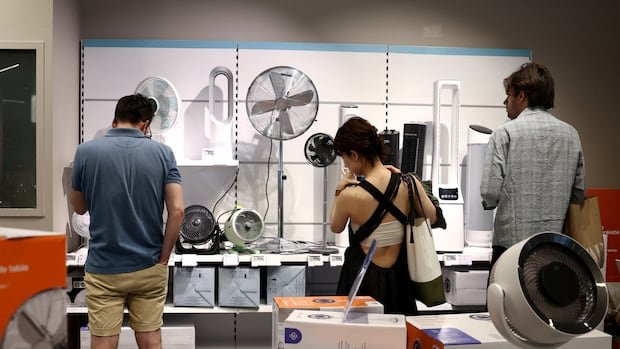
Air-conditioned spaces are deemed the safest during extreme heat episodes, but for those without access, utilizing fans can provide some relief. Research indicates that fans can be beneficial up to temperatures around 38 degrees Celsius, aiding in lowering body temperature and reducing the heart’s workload, particularly for older adults or individuals with heart conditions.
However, caution must be exercised as fans can become hazardous when indoor temperatures match or surpass body temperature, creating a “convection oven” effect, especially for older individuals. To maximize the cooling effect, fans should be directed at the body to enhance heat exchange with the environment.
Another effective method for individuals without air conditioning is to moisten their skin with water, facilitating evaporative cooling akin to artificial sweating. This approach not only cools the body but also conserves precious body water resources.
When it comes to hydration, it is vital to consume fluids with electrolytes, especially on celebratory occasions like Canada Day, as alcoholic beverages can lead to dehydration. Furthermore, heat can impact mood, mental health, and how the body responds to medications, emphasizing the need for vigilance, especially among children, older adults, and individuals on medications.
As human-induced climate change exacerbates extreme heat events, nighttime temperatures pose an increasing threat. Experts recommend planning for night-time relief as the lack of temperature respite from day to night can accumulate stress on the body. Maintaining cool environments below 26 degrees Celsius is crucial in reducing the risk of severe health events associated with heat exposure.
In conclusion, proactive planning, mutual check-ins, and vigilance for signs of heat stress such as dizziness, lightheadedness, and nausea are essential during this heatwave.