

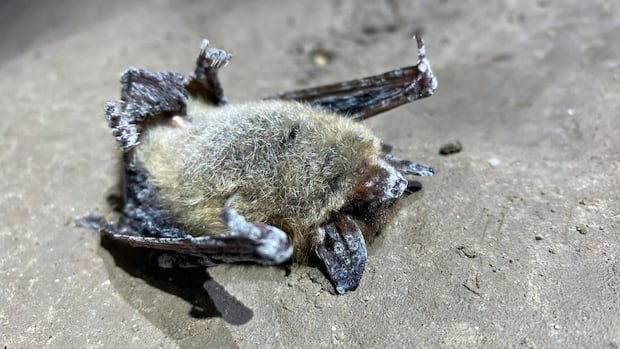

Parks Canada teams in Alberta are actively working in bat caves, utilizing a mixture of bacteria in an effort to protect the nocturnal mammals from a lethal and fast-spreading fungal disease. Nina Veselka, a biologist with Parks Canada, witnessed the impact of the infection at a cave in Jasper National Park, where exhausted bats had dropped from the walls and were struggling to survive on the cave floor. Veselka expressed concern about the possibility of local extinction in the cave due to the white-nose syndrome, a fungal infection that poses a threat to the entire hibernating bat population in Alberta.
The white-nose syndrome is caused by a fungus that thrives in cold and damp environments like bat caves, infiltrating the bats’ tissues and manifesting as a fuzzy, white growth on their snouts and wings. This fungus disrupts the hibernation of bats, forcing them to wake up and deplete their fat reserves, putting them at risk of starvation. While the fungus does not harm humans, it can wipe out up to 98% of a bat colony.
During a survey at a Jasper National Park cave, Veselka and the ecological monitoring team discovered numerous dead bats near the cave entrance, indicating a significant impact on the hibernating bat colony. The presence of white-nose syndrome was confirmed in three caves in the Rockies during surveys conducted by the provincial government and Wildlife Conservation Society Canada. Additionally, the fungus was detected in other bat caves across Alberta, including Cadomin, the largest known bat hibernation site in the province.
To combat the spread of the fungus, crews are applying bacteria strains that hinder fungal growth at the entrances of maternity roosts in Jasper and inside confirmed roosting spaces. Veselka explained that these probiotics are intended to transfer onto the bats’ wings, tails, and faces to slow down the fungal development. The proactive use of probiotics in Alberta aims to treat the disease, while in British Columbia, where the fungus has not yet spread, it serves as a preventive measure.
Veselka emphasized the importance of these efforts, highlighting that there is hope in the fight against white-nose syndrome. The fungus, which was first identified in Europe in the early 1900s and later spread to North America, has devastated bat populations, with its arrival in Alberta in 2022 posing a new threat. The decline in bat populations due to the disease could have lasting ecological consequences, as bats play a crucial role in controlling insect populations.
Lisa Wilkinson, a biologist and bat specialist for the Alberta government, warned about the long-term impacts of white-nose syndrome on bat populations, noting the slow recovery process due to bats typically producing only one pup per year. While ongoing research and treatment efforts are underway, there is no definitive solution to prevent or eradicate the fungus causing the syndrome.