

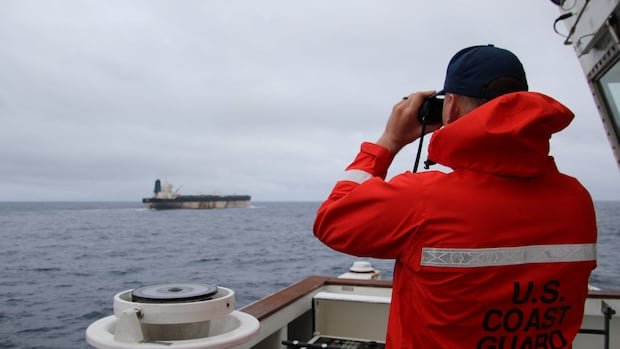

The crude tanker previously known as Marinera was monitored by the U.S. Coast Guard during its voyage across the North Atlantic towards Russia. The Coast Guard had been tracking the vessel for over two weeks in line with its restrictions on Venezuelan oil. Ship records revealed that during this period, the tanker altered its route, name, and flag. The crew reportedly hurriedly painted a Russian flag on the vessel’s worn hull.
Despite these efforts, the U.S., with assistance from the U.K., successfully seized control of the ship on Wednesday off the southern coast of Iceland. The U.S. authorities stated that the seizure was part of their strategy to target ships deemed a threat to the security and stability of the Western hemisphere. Russia, which had dispatched a submarine and other military vessels to the region, condemned the action, labeling it as illegal and akin to piracy.
Experts in maritime intelligence at Windward acknowledged this rare event of a NATO country intercepting a Russian vessel in international waters. They predict more tankers will fall under U.S. control as pressure intensifies on Venezuela, with the possibility of additional Russian ships becoming involved in the campaign.
The trend of ships falsely flagging themselves to Russia has surged in recent weeks, with 21 dark fleet tankers adopting Russian flags. This escalation has been noted by industry analysts, with concerns over vessels engaging in deceptive practices to avoid oversight. The risk of being labeled stateless and subject to seizure has prompted many ships to switch flags to Russia.
The Russian transport ministry confirmed granting the Marinera temporary permission to sail under the Russian flag in late December. The vessel had allegedly been fraudulently flagged to Guyana before hastily changing to a Russian flag upon interception. The U.S. federal warrant for transporting sanctioned Iranian oil prompted the seizure, with potential prosecution of the crew mentioned by White House officials.
The actions taken by the U.S. in seizing vessels may influence other nations to adopt similar tactics. Increased maritime patrols by NATO countries following security concerns and questions regarding potential counter-actions by other nations have arisen in response to the recent events surrounding the interception of tankers in international waters.