

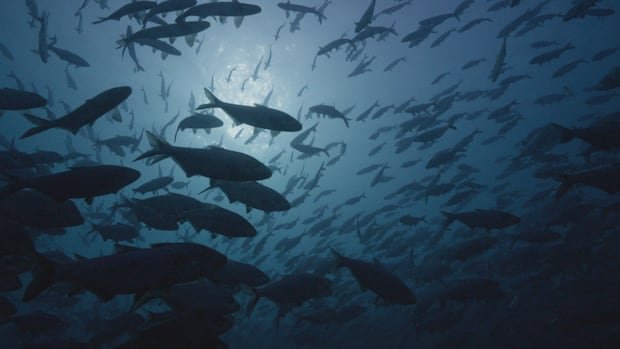

In Lake Huron, fish are congregating in large numbers around the warm waters emitted by a nuclear plant in Ontario, creating a remarkable sight that is now being closely observed. Filmmakers Yvonne Drebert and Zack Melnick are utilizing an advanced underwater drone, valued at $250,000 and one of a limited number worldwide, to capture footage from remote and deep areas of the Great Lakes. This unique access to underwater scenes is in preparation for an Earth Day livestream event promoting their new documentary series, “Hidden Below: the Great Lakes.”
The focus of the drone’s exploration is the warm water discharge from the Bruce Nuclear Generating Station near Tiverton, Ont., which serves as a sanctuary and feeding ground for various fish species. Referred to as “fish city” by the filmmakers, the area attracts a diverse range of fish, including gizzard shad, bigmouth buffalo, walleye, and more, creating a mesmerizing underwater spectacle.
Experts point out that the warm water plume from the nuclear plant enhances food availability for the fish, leading to increased nutrient cycling and algae growth. However, this phenomenon may signify a significant shift in the ecosystem due to the presence of invasive mussel species, zebra and quagga mussels, which have depleted plankton levels and altered the food chain dynamics in the Great Lakes.
The proliferation of fish in the warm waters might indicate a scarcity of food in the main lake, reflecting ecological changes brought about by the invasive mussels. The altered ecosystem poses challenges for native fish species adapted to colder waters, potentially impacting indigenous communities that rely on fishing for sustenance. The presence of warmer waters also facilitates the establishment of invasive species in northern ecosystems, raising concerns about the long-term health of the Great Lakes and the communities dependent on them.
Given the Great Lakes’ vital role in supporting various sectors and millions of people, experts emphasize the need to monitor and address unusual occurrences like the “fish city” phenomenon. The evolving dynamics in Lake Huron prompt critical questions about the impact of industrial activities, such as warm water discharges, on the ecosystem and the communities interconnected with these vast freshwater resources.