

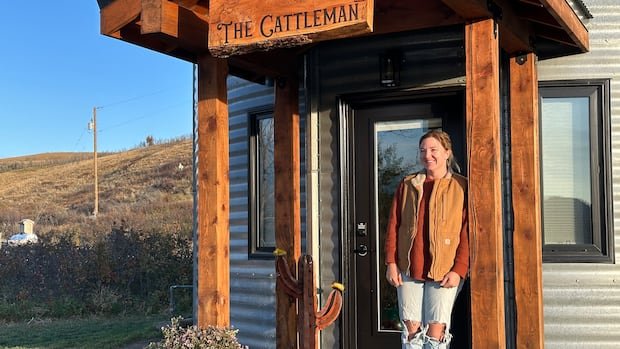

Some ranchers in Alberta are exploring tourism as a way to sustain their family farms for future generations, introducing unique accommodations for visitors. Breanna Morrison, a ranch owner in Southern Alberta, purchased five old grain bins through an online auction with the vision of transforming them into hotel rooms instead of using them for traditional storage purposes.
Saddle Hill Ranch Cabins, located near Pincher Creek, debuted in July with the grain bins repurposed as two-story hotel units, each named uniquely such as “The Cattleman,” “The Trail Boss,” and “The Wrangler.” These converted grain bins offer guests a taste of prairie life, reminiscent of scenes from the popular show Yellowstone, with rates around $300 per night and high demand throughout the summer season.
For Morrison, the project involved overcoming challenges such as obtaining permits for this unconventional venture from the rural municipality. The process, spanning multiple years, included intricate tasks like installing windows, doors, and interior walls within the round metal structures, alongside plumbing, heating, and electrical work to make the cabins fully functional in the remote grazing land setting.
The initiative aims to diversify the ranch’s revenue streams, ensuring sustainability and potential interest from Morrison’s three young children, including a newborn. With the aging farming population and diminishing family farms in Canada, succession planning has become a critical issue. Morrison, a third-generation rancher, aspires for her children to inherit the family business, emphasizing the importance of preserving the ranch’s legacy and fostering growth opportunities.
As per projections by RBC Economics, a significant leadership turnover is expected in the agricultural sector by 2033, with an increasing number of farmers reaching retirement age. The trend of transitioning farmland ownership poses substantial financial implications, estimated to involve billions of dollars in property transfers over the coming decade.
Agricultural experts, like Rebecca Purc-Stephenson from the University of Alberta, highlight the complexities of succession planning in farming, accentuated by rising land values and the evolving farm culture. Solutions such as agritourism are being explored to attract younger generations to farming, though the shift towards a more diversified income model poses challenges for traditional farm operators.
Another rancher, Cindy Marr, and her husband, have successfully converted three grain bins into guest houses at their beef farm near Waterton Lakes National Park, catering to visitors from diverse countries. Marr’s endeavor reflects a desire to sustain the family ranch for future generations, providing opportunities for her adult children to be part of the agricultural legacy while maintaining viability in the changing agricultural landscape.
With the evolving dynamics of farm ownership and income volatility, many farmers, like Peyton Marr, are balancing multiple roles to support their farming aspirations. The aspiration to continue ranching is intertwined with the reality of needing supplementary income sources, reflecting the shifting paradigms within the agricultural industry toward sustainability and diversified livelihoods.