

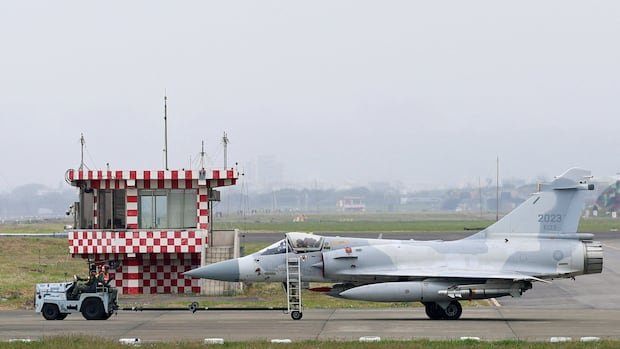

China initiated 10 hours of live-firing drills around Taiwan on Tuesday, utilizing new amphibious assault vessels alongside bomber planes and warships in its extensive war games designed to simulate a blockade of the island. In response, Taiwan announced heightened readiness and criticized the Chinese government as the “biggest disruptor of peace.”
The Eastern Theatre Command declared that the exercises would continue until 6 p.m. in the sea and airspace of five locations surrounding Taiwan, with naval and air force units conducting strikes on maritime and aerial targets and anti-submarine operations around the island’s north and south regions. As a result of the military activities, Taiwan’s aviation authority mentioned that over 100,000 international air travelers would face flight disruptions, with only a northeast corridor to Japan operating for commercial flights, while routes to the offshore islands of Kinmen and Matsu near China’s coast remain closed.
China’s Maritime Safety Administration expanded designated zones for live-firing exercises on Monday, marking the “Justice Mission 2025” drills as the most extensive in terms of coverage and proximity to Taiwan compared to past exercises. These war games commenced following the U.S.’s announcement of a record $11.1 billion arms package to Taiwan, sparking strong reactions from the Chinese defence ministry.
Analysts suggest that the drills, China’s sixth major round since 2022, aim to practice swiftly encircling Taiwan to neutralize its weapon stockpile and impede efforts to resupply the island from Japan or nearby U.S. bases. A senior Taiwan security official criticized China’s actions as a blatant provocation of the international order, expressing concerns over potential further provocations during the ongoing exercises.
With trade worth $2.45 trillion passing through the Taiwan Strait annually and the island’s airspace serving as a critical link between China and other markets, tensions remain high as China seeks to assert dominance over the region through aggressive tactics. Despite the escalating military activities, U.S. President Donald Trump downplayed concerns, citing China’s long history of naval exercises in the area and expressing confidence in his relationship with Chinese President Xi Jinping.
As the situation unfolds, Taiwan maintains its stance against China’s claims of national unity, emphasizing that the island’s future should be determined solely by its residents.