

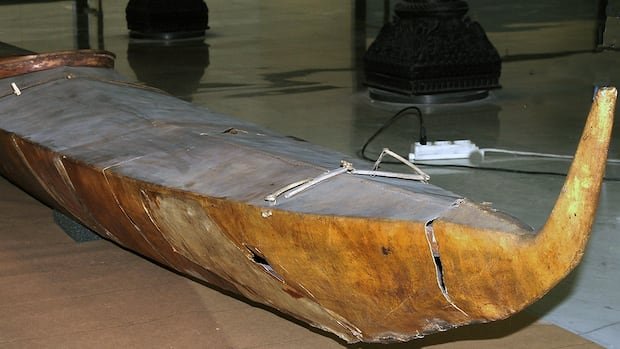

Darrell Nasogaluak can easily recognize a kayak from his western Arctic region by its unique features, such as the distinctive curved tips at the bow and stern. This particular kayak has been housed at the Vatican Museums for a century, showcasing signs of extensive use with oil stains, making it an authentic artifact. Negotiations spanning several years have led to the repatriation of this kayak and 61 other sacred and cultural objects from Inuit, First Nations, and Métis communities stored at the Vatican Museums, now en route to Montreal.
Nasogaluak, a native of Tuktoyuktuk, N.W.T., where it is believed this kayak originated, emphasizes the significance of traditional craftsmanship among the Inuvialuit people. His grandfather passed down the art of kayak building to him, a skill he now imparts to younger generations in schools, preserving the cultural heritage. These kayaks were once crucial tools for hunting beluga whales in the Mackenzie Delta, known for their lightweight build and swiftness.
The Inuvialuit Regional Corporation (IRC) spearheaded the efforts to reclaim this kayak, recognizing its historical and cultural importance to their community. It originates from Kitigaaryuit, an area acknowledged as a national historic site by Canada, symbolizing the Inuvialuit’s contribution to the country’s identity. Collaborative initiatives involving the federal government, the Canadian Council of Catholic Bishops (CCCB), and Inuit Tapiriit Kanatami (ITK) have facilitated the repatriation process, fostering reconciliation and mutual understanding.
The return of the kayak marks a significant step in acknowledging past injustices and promoting cultural exchange between Indigenous communities and the Vatican. Beyond the initial focus on the kayak, the agreement expanded to include various cultural objects from Inuit, First Nations, and Métis origins, reflecting a broader commitment to dialogue and respect. Despite uncertainties surrounding the kayak’s transfer to the Vatican in 1925, the current repatriation efforts signify a positive shift towards cultural preservation and collaboration.
As the artifacts make their way back to Canada, representatives from the IRC and the Assembly of First Nations will oversee their arrival at the Canadian Museum of History for examination. While the kayak will remain temporarily at the museum due to the lack of suitable facilities in the Inuvialuit region, plans are underway to ensure its preservation and accessibility to community members with expertise in traditional kayak construction methods.
The return of these cultural objects signifies a pivotal moment for Indigenous communities, fostering cultural revitalization and strengthening ties with their heritage. It represents a tangible step towards preserving and celebrating diverse cultural legacies for future generations.