

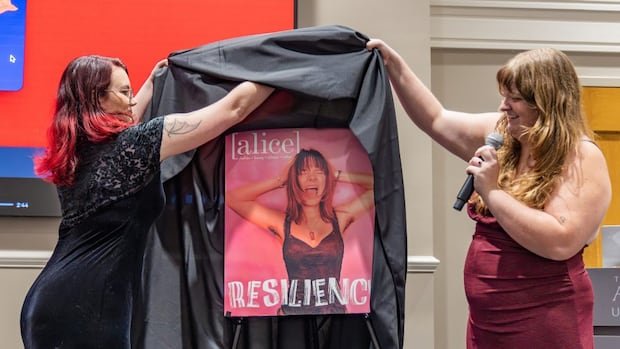

Leslie Klein, the managing editor of Alice magazine, expressed astonishment at the abrupt closure of the publication due to its focus on women readers. The University of Alabama recently shut down Alice and Nineteen Fifty-Six, a Black student publication, citing non-compliance with anti-diversity measures enforced by the Donald Trump administration.
Klein emphasized feeling that their freedom of speech and press had been deeply violated by the university’s decision. The editors of both magazines were informed of the closure on Monday, with Gabrielle Gunter of Alice describing it as bewildering, especially since the magazine had just marked its 10-year anniversary.
Nineteen Fifty-Six, named after the year the first Black student enrolled at the university, expressed devastation over the shutdown. The university referenced a July memo from U.S. Attorney General Pamela Bondi, warning against engaging in Diversity, Equity, and Inclusion (DEI) programs, which have been criticized by President Trump.
The University of Alabama defended its actions by stating the need to comply with legal obligations while ensuring all students feel welcome in funded programs. Despite this, Klein argued that Alice is inclusive and has never faced complaints regarding discrimination. The Foundation for Individual Rights and Expression (FIRE) has demanded the magazines’ reinstatement, calling the closures an attack on student press.
In response to Trump’s anti-DEI guidelines, the University of Alabama has targeted various student groups, including closing dedicated spaces for the Black Student Union and LGBTQ+ community. The administration’s stance on funding universities that do not align with its demands has sparked controversy in academic circles.
The university proposed starting a new student magazine with a broader focus, inviting former staff from Alice and Nineteen Fifty-Six to participate. However, Klein and her colleagues declined, opting to concentrate on preserving Alice, even if it means relaunching under a different name with external support, emphasizing the importance of amplifying women’s voices on campus.