

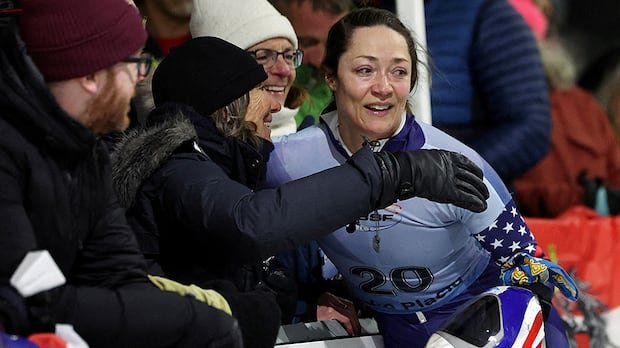

Katie Uhlaender, a renowned U.S. skeleton racer with five Olympic appearances, faced a setback in her quest for a spot at the Milano Cortina Games. The Court of Arbitration for Sport (CAS) announced it could not intervene in a race manipulation dispute involving Canada’s skeleton coach that affected Uhlaender’s qualification chances.
Uhlaender sought CAS’s intervention after Canada withdrew four racers from a North American Cup event in Lake Placid, reducing the available rankings points and causing her to miss out on Olympic qualification. Despite Uhlaender’s appeal, the International Bobsleigh and Skeleton Federation and the International Olympic Committee upheld their decisions, prompting her to turn to CAS for resolution.
However, CAS clarified that its remit for the Milano-Cortina Winter Games only covers disputes occurring within 10 days of the event’s start, excluding the incident on Jan. 11 that impacted Uhlaender. Consequently, CAS dismissed the application due to jurisdictional limitations.
As a result, Kelly Curtis and Mystique Ro will represent the U.S. in the women’s skeleton event at the Olympics. In a similar case, CAS rejected an appeal by Ireland’s luge team against the International Luge Federation, citing the same 10-day window restriction.
Ireland’s appeal centered on Elsa Desmond being allegedly denied a qualifying place for the 2026 OWG, with concerns over the allocation of spots to athletes with Individual Neutral Athlete (AIN) status. Despite the contention around qualification spots, all 106 luge athlete positions for the games are filled, with a debate arising over Austrian slider Wolfgang Kindl’s double qualification.
While the dispute continues, Canada’s skeleton team faces allegations of sabotaging an American athlete’s Olympic journey, which Bobsleigh Canada Skeleton has refuted. The ongoing controversies highlight the complexities and challenges within winter sports competitions.