

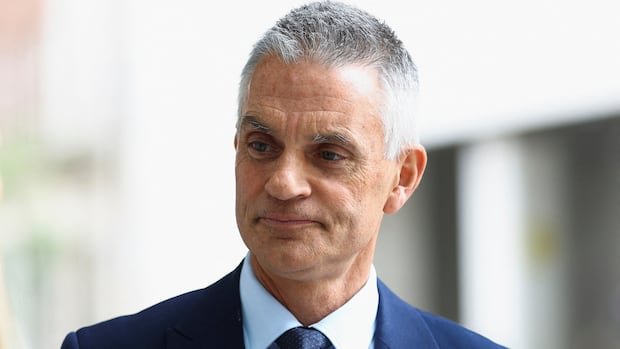

The chief of the BBC and the top news leader at the British broadcaster stepped down on Sunday following backlash over the editing of a speech by U.S. President Donald Trump.
Director-general Tim Davie and head of news Deborah Turness both tendered their resignations, the BBC confirmed.
Criticism arose after the BBC edited a speech by Trump on January 6, 2021, ahead of the Capitol riot in Washington. Critics argued that the editing in a BBC documentary was misleading and omitted a section where Trump urged his supporters to demonstrate peacefully.
In a message to staff, Davie stated that his decision to leave after a five-year tenure was entirely his own. He mentioned working with the Board to ensure a smooth transition to a successor in the coming months.
Turness acknowledged the controversy surrounding the Trump documentary and its impact on the BBC, an organization she deeply cares for. As the CEO of BBC News and Current Affairs, she took responsibility, emphasizing there is no institutional bias and defending the dedication and impartiality of the BBC journalists.
Former President Trump reacted to the situation by sharing a link to a Daily Telegraph article on his Truth Social network, condemning what he referred to as dishonest journalists interfering in a presidential election.
The pressure on BBC’s top management heightened after the publication of a dossier by Michael Prescott, criticizing not just the Trump speech edit but also the BBC’s handling of transgender issues and potential anti-Israel bias in its Arabic service.
As a publicly funded national institution, the BBC faces extensive scrutiny and criticism, especially due to its annual license fee paid by all TV-owning households in the UK.
The BBC’s news division, in particular, is under constant review for bias, as it is obligated to maintain impartiality according to its charter. The organization often faces accusations from both political spectrums, with conservatives perceiving a leftist tilt and liberals alleging conservative influences.
The BBC’s coverage of the Israel-Hamas conflict has also drawn widespread criticism. In a recent incident, a Gaza documentary was removed from the BBC’s streaming service after it was revealed that the narrator was the child of a Hamas government official.
Political figures such as Kemi Badenoch from the Conservative Party have called for substantial reforms to address what they see as institutional bias. Meanwhile, Lisa Nandy from the Labour Party praised Davie’s work and emphasized the importance of the BBC’s role in providing trusted news and quality programming for the nation’s democratic and cultural fabric.