

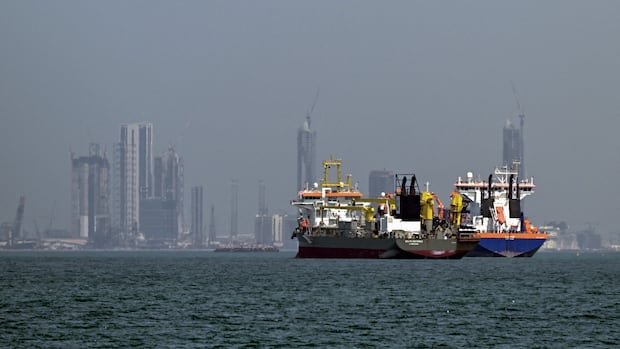

Amid the escalating conflict in the Middle East close to the Strait of Hormuz, merchant vessels and their crews are facing significant risks. According to the U.K. Maritime Trade Operations Centre, thirteen ships have been targeted in the strait since the commencement of the U.S. and Israel’s conflict with Iran on February 28, resulting in the deaths of at least seven crew members.
Describing the current situation as the most perilous globally, Phillip Belcher, the marine director at Intertanko, an organization representing around 200 tanker owners worldwide, highlighted the anxiety among seafarers. Crew members are witnessing missiles passing above their ships, unsure if they might be the next target. The lack of protection on these vessels amplifies the sense of vulnerability.
The Strait of Hormuz, bordered by Iran, has been threatened with a blockade on oil exports during the conflict, leading to a drastic reduction in marine traffic. The United Nations Trade and Development has reported a decrease from approximately 151 daily transiting ships in February to only four on a recent Saturday. This blockade has effectively halted a crucial shipping route connecting the Persian Gulf to the open sea.
As a response to the heightened risks, some vessels are altering their tracking data to appear linked to China in hopes of reducing the chances of being attacked. Additionally, certain ships are disabling their Automatic Identification System (AIS) transponder to conceal their positions. However, the large tankers move slowly, and with the strait being just 32 kilometers wide and numerous Iranian observers present, passing through undetected is nearly impossible.
For almost two weeks, hundreds of vessels have remained stranded in the Persian Gulf, impacting about 20,000 seafarers in the region, as reported by the International Maritime Organization. The situation not only affects oil tankers but also various cargo ships transporting goods, food, and chemicals. German shipping company Hapag-Lloyd has six container vessels anchored in the region and faces challenges in planning due to the dynamic risks involved.
With the threat of sea mines potentially looming, U.S. President Donald Trump’s suggestion of naval escort for safe passage remains uncertain. Belcher expressed skepticism about the feasibility of naval protection in the area, citing unsafe conditions. American intelligence sources have indicated Iran’s plan to deploy sea mines, a tactic last seen during its conflict with Iraq in the 1980s.
Despite the absence of confirmed evidence of mine deployment in regional shipping lanes, the lingering threat poses significant risks to maritime trade. Experts emphasize that the only viable solution for normalizing shipping operations is a cessation of hostilities, as the ongoing situation is taking a toll on seafarers stranded at sea for extended periods.
Jacqueline Smith, maritime coordinator at the International Transport Workers’ Federation (ITF), expressed concerns about seafarers being subjected to risks by shipowners seeking profit amidst the crisis. Many seafarers, predominantly from developing nations, are enduring hardships far from home, emphasizing the need to prioritize their safety and well-being during these challenging times.