

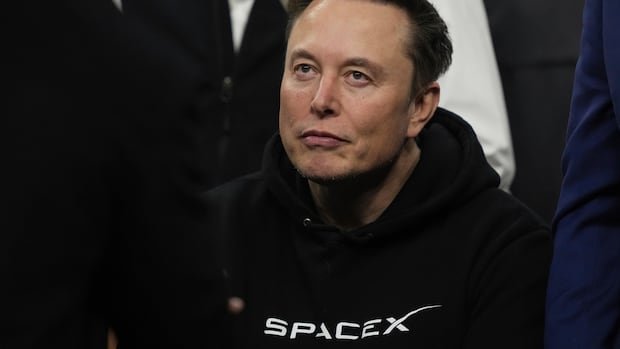

IPOs have been making waves in recent news, with several prominent private companies announcing plans to go public. Much attention has been on SpaceX, the rocket company founded by Elon Musk, which is expected to have a groundbreaking initial public offering (IPO) on the Nasdaq this Friday. There is also high anticipation surrounding the upcoming IPOs of artificial intelligence startups Anthropic and OpenAI.
The process of an IPO, or initial public offering, involves a company selling its shares to the public for the first time on a stock exchange to raise capital for business expansion. Individual investors, who are not professional traders, can purchase shares and become part-owners of the company, potentially experiencing financial gains or losses based on the company’s performance.
The spotlight on these IPOs is due to their unprecedented scale. SpaceX has priced its shares at $135 US each, valuing the company at a staggering $1.8 trillion US. Anthropic and OpenAI are also eyeing valuations close to $1 trillion US each. These companies offer exposure to space technology, artificial intelligence, and have attracted significant investor interest due to the potential transformative impact on the global economy.
Despite the hype, some analysts have expressed concerns. Research firm Morningstar suggested that SpaceX might be overvalued, estimating its value at $63 US per share, significantly lower than the IPO offering price. SpaceX, in its IPO filing, acknowledged a history of losses and uncertainties about future profitability.
Professor Stephen Foerster from the Ivey Business School highlighted that Elon Musk’s control of over 80% of SpaceX’s voting power raises governance concerns, making investors heavily reliant on Musk’s decisions.
When a company goes public, founders like Musk stand to gain significantly, with Musk’s shares potentially making him a trillionaire. Venture capitalists, employees holding shares, and investment banks involved in the IPO also benefit from the company’s public debut.
Individual investors typically find it challenging to access IPO shares at the offering price, but recent trends have seen more opportunities for retail investors to participate. SpaceX has allocated a higher percentage of shares to retail investors, and platforms like Wealthsimple are enabling Canadian clients to request shares in the SpaceX IPO.
Following an IPO, shares become tradable on exchanges, allowing individual investors to buy and sell freely. The volatile nature of initial trading can lead to price fluctuations, driven by public demand and early investors selling their shares.
Investing in SpaceX carries risks due to its status as a new IPO, unproven technology, and current lack of profitability. Past major IPOs like Tesla and Groupon have shown varying performances over time, emphasizing the unpredictability of investing in newly public companies.