

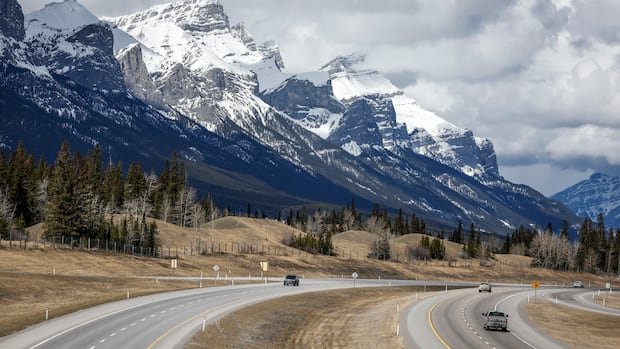

A historic absence of snowfall in the western United States has sparked worries about future water scarcity and wildfire risks in the region. A recent study from Canada indicates that this trend may indicate a longer-lasting pattern that could jeopardize water resources for millions of people across the nation.
Snow cover levels in the western U.S. are significantly lower than usual for this time of year, marking the lowest measurements recorded since NASA’s Terra satellite started tracking in 2001. The decline in snow accumulation is believed to be linked to a warming climate, which has led to a decrease in snowpack and water content in parts of Western Canada over the past two decades, according to research from Concordia University in Montreal.
Although the affected areas constitute only a small portion of Canada’s landmass, they impact the headwaters of crucial rivers in the Canadian Rockies. Researchers found that while some regions in southern Canada also experienced slight decreases in snow cover, these declines were not statistically significant on their own. However, when assessed collectively, 14 out of 25 major drainage basins in Canada were found to be affected by diminishing snow levels.
The diminishing snow levels have far-reaching implications, affecting various sectors such as municipal water systems, agriculture, lake water levels, shipping, and the heightened risk of wildfires in Canadian forests. Snowpack, particularly in mountainous regions, plays a vital role in storing and gradually releasing water, serving as a natural water tower that sustains water supply for various human activities and ecosystems.
The ongoing snow scarcity is disrupting the ski season at prominent resorts in the region, with many having to halt operations or reduce services due to the lack of snow and warm weather conditions. Vail Resorts, a major ski slope operator in Canada and the U.S., has reported one of the lowest early-season snowfalls at its western U.S. locations. Additionally, Vancouver is experiencing its first snowless winter in over four decades.
The deficiency in snowfall is attributed to a shift from snow to rain precipitation, termed a “wet snow drought” by experts. This change is consistent with expectations in a warming climate, where rising temperatures in the fall can lead to rain instead of snow, hindering snowpack accumulation and potentially increasing water stress in forests, consequently elevating the risk of forest fires.
Research indicates that the declining snow trend observed in the Canadian Rockies is extending to mountainous regions in the western United States. A new measurement called “snow water availability” has been developed to gauge the water content in snowpack more accurately using satellite remote sensing technology. The study highlights that watersheds such as the Okanagan in B.C., the Assiniboine-Red River basin in Manitoba, and the Saskatchewan River basin are among the most impacted by diminishing snow water levels.
The study’s co-author emphasizes the importance of understanding and mitigating the impacts of reduced snow cover on water security, citing past instances where diminished snowpack led to severe drought conditions and water supply disruptions. While vulnerabilities due to declining snow levels are expected to intensify in the future, further research is needed to assess the rate and severity of potential water shortages.
In conclusion, experts stress the necessity of studying these impacts to prepare for necessary adaptations in water management practices as changing climate patterns continue to alter snowfall dynamics and water availability.