

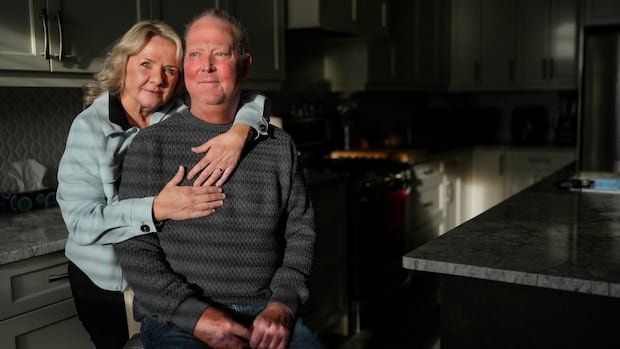

Steve Blake felt fortunate when he moved into his new residence in 1995. The house was sturdy, well-constructed, and devoid of leaks. His basement provided a comfortable workspace where he spent approximately six hours daily, five days a week, after sending his children off to school. Little did he know that this routine, maintained for over 25 years, could be posing a grave threat to his health.
In 2023, at 55 years old, Blake began experiencing a persistent cough. Initially unconcerned due to his active lifestyle and good health, he was taken aback when he struggled to breathe one morning before a round of golf. Subsequent medical assessments revealed devastating news – a diagnosis of inoperable Stage 4 lung cancer with a life expectancy of only 12 to 14 months.
Blake, a non-smoker with no exposure to secondhand smoke, and his wife, Kelly, embarked on a quest for answers. Their research repeatedly pointed to radon, a silent, invisible, and highly toxic gas that can accumulate indoors. Monitoring his basement in late 2022 revealed consistently elevated radon levels during the winter months.
Despite lacking concrete evidence linking his illness to the basement, Blake expressed lingering concerns about the air he had been breathing for years. The sinister nature of radon, a leading cause of lung cancer in Canada, prompted a nationwide study revealing that an estimated 3,200 Canadians succumb to radon-induced lung cancer annually.
To combat the lack of testing for radon exposure, a team of scientists across Canada is pioneering innovative ways to detect radon levels using toenail clippings. This unconventional approach aims to provide insights into individuals’ long-term radon exposure and potentially influence lung cancer screening criteria in the future.
With over 40% of Canadian households unaware of the dangers posed by radon, efforts to increase public awareness and implement home mitigation strategies are imperative. Despite advancements in lung cancer treatments, only select provinces have established screening programs, with British Columbia leading the way in addressing radon exposure within screening criteria.
Steve and Kelly Blake, grappling with the implications of radon exposure in their home, emphasized the importance of government intervention to safeguard homeowners from this pervasive threat. Their decision to invest in a mitigation system underscored the critical need for proactive measures to combat radon-related health risks.