

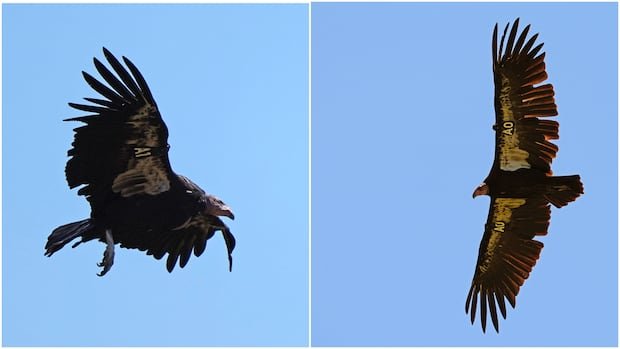


Upon receiving a transmitter alert indicating a male condor had been stationary for an extended period in Northern California a few months ago, conservationists braced for the worst.
To their delight, it turned out to be a positive development.
Chris West, a wildlife biologist at the Yurok Tribe Wildlife Department, shared, “He was simply deeply focused on an egg and engaged in incubation,” in a conversation with As It Happens host Nil Köksal.
While visual confirmation of the egg’s existence is pending, the male condor and its partner are exhibiting behavior suggesting they are taking shifts guarding a nest nestled deep within the expanse of Redwood National and State Parks and nurturing its precious contents.
If their suspicions are accurate and the egg successfully hatches, the offspring will mark the initial wild birth of its kind in Northern California in approximately 130 years.
This development signifies a significant achievement for the Yurok Tribe, which has collaborated with governmental entities for 17 years to reintroduce the condors to the area after their near extinction due to European colonization.
West, overseeing the Northern California Condor Restoration Program, expressed, “Two birds engaging in the natural process and contributing to the next generation of wild birds for the region is truly remarkable.”
Introducing the region’s premier wild mating duo
Historically abundant along the western coastline from British Columbia to Mexico, California condors faced severe threats such as poaching, habitat degradation, and lead poisoning from ammunition, leading to a drastic decline in their population.
By the 1980s, only about 20 California condors remained in the wild. Presently, owing to extensive conservation efforts, captive breeding initiatives, and rewilding programs, their population has rebounded to 392.
Among these, a mere 24 reside in Northern California, where condor releases commenced in 2022.
However, optimism arises with the emergence of a devoted pair of condors.
The female, A0, bred at the Oregon Zoo, is known as Ney-gem’ ‘Ne-chween-kah in Yurok, translating to “she carries our prayers.” Her partner, A1, born at the World Center for Birds of Prey, goes by Hlow Hoo-letl, signifying “at least I fly!”
West’s team initially observed a connection between the pair last year when they frequently disappeared together.
“When you notice a mature male and female isolating themselves from the group, it sparks suspicion as they are typically social creatures that remain in large groups,” West stated.
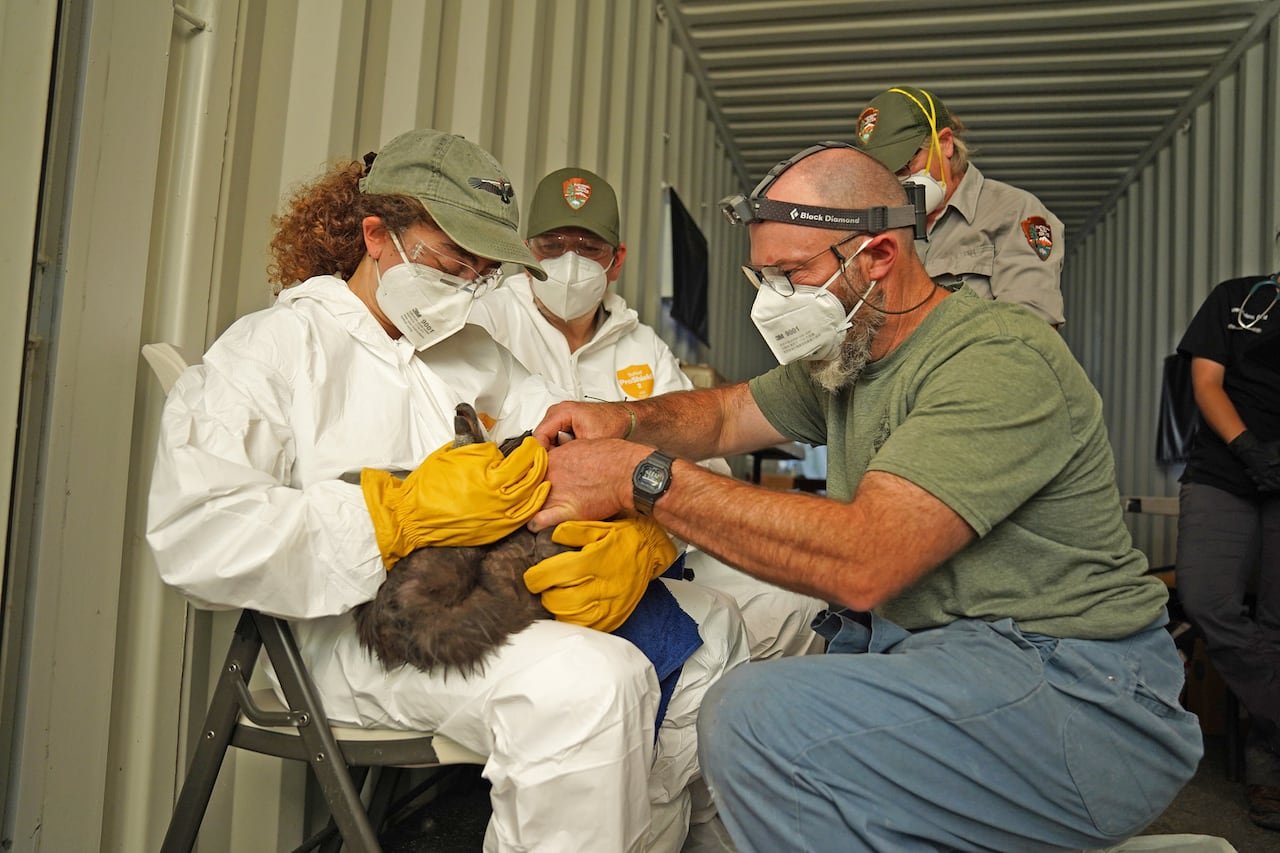
Condors typically lay a single egg annually, and previous attempts at breeding between Hlow Hoo-letl and Ney-gem’ ‘Ne-chween-kah did not result in offspring.
However, this year, the pair resumed their