

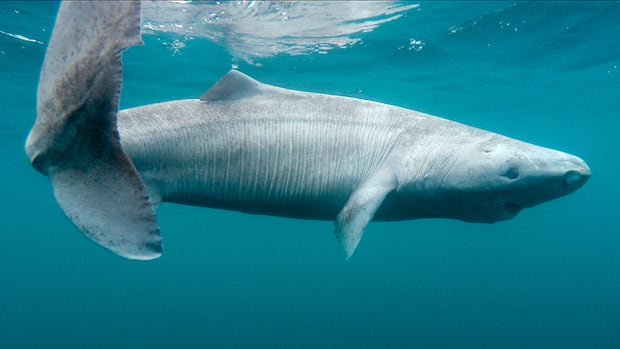

A rare and elusive Greenland shark was discovered washed up on the shores of northwestern Ireland, surprising zoologist Emma Murphy. The massive ocean dwellers are known for their elusive nature and typically inhabit the remote depths of the Arctic and North Atlantic oceans. This particular sighting marks the first recorded instance of a Greenland shark becoming stranded on Ireland’s coast, making it an “exceedingly rare” occurrence in Irish waters, according to the National Museum of Ireland.
The shark was initially mistaken for a basking shark by bystanders near Sligo on April 11. Upon closer inspection by scientists from the Irish Whale and Dolphin Group, it was identified as a Greenland shark, prompting further investigation by the National Museum of Ireland in Dublin. These sharks, which rank as one of the largest carnivorous shark species globally, can reach lengths of up to seven meters and are known to have a lifespan of over 270 years, with some individuals estimated to live up to 400 years.
While the primary habitat of Greenland sharks is the cold waters of the Arctic and North Atlantic, research suggests that they may have a broader range than previously believed. Shark scientist Dean Grubbs highlighted that these creatures can thrive in various cold-water environments, potentially explaining the shark’s presence in Irish waters. Despite their widespread distribution, Greenland sharks remain elusive due to their deep-sea habitat, with sightings by humans being rare occurrences.
The discovery of the stranded Greenland shark in Ireland has provided researchers with a unique opportunity to study this remarkable species up close. The shark’s carcass, a three-meter-long male estimated to be around 150 years old, was carefully retrieved for further examination. Scientists are still investigating the cause of death, as the shark appeared to be in good health with no apparent signs of trauma or malnutrition.
The National Museum of Ireland plans to preserve the shark’s skin and skull for public display, ensuring that this rare specimen can be appreciated by future generations. Despite the mysterious circumstances surrounding the shark’s appearance on the Irish coast, its legacy will live on in the museum’s collection as a testament to the wonders of the natural world.