

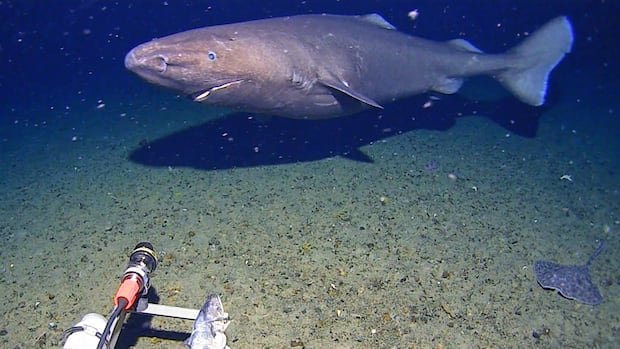

An unusual scene unfolded as a large, sluggish shark meandered across a desolate seabed in the deep, dark waters of Antarctica, defying previous beliefs that sharks were absent in this frigid region. The discovery of this massive sleeper shark, estimated to be between three to four meters in length, was captured on video in January 2025 by the Minderoo-UWA Deep-Sea Research Centre’s camera near the South Shetland Islands.
Researchers, led by Alan Jamieson, were surprised by the presence of such a substantial shark in Antarctica, a region typically devoid of sharks. The footage, taken at a depth of 490 meters with a water temperature of just 1.27 degrees Celsius, also revealed a skate resting motionless on the ocean floor, seemingly unfazed by the passing predator.
Experts like Peter Kyne, a conservation biologist at Charles Darwin University, noted the scarcity of data on shark populations in Antarctica due to the region’s isolation and the challenges of monitoring marine life in such extreme conditions. Climate change and warming oceans may be pushing sharks further south, with sleeper sharks possibly existing in Antarctica unnoticed for a long time.
The sighting of the shark at a specific depth of around 500 meters highlights the unique stratification of the Antarctic Ocean, where different water layers create distinct habitats for marine life. Jamieson suggested that other Antarctic sharks could be thriving at similar depths, feasting on the remains of deceased marine creatures that sink to the seabed.
Given the limited research presence at these depths in Antarctic waters, such discoveries are sporadic and often occur during the summer months when observation equipment can operate effectively. The finding of the sleeper shark presents a rare glimpse into the hidden world beneath Antarctica’s icy surface, shedding light on the mysterious and complex ecosystem that thrives in this extreme environment.