


In London, Ontario, the tally of reported shootings hit 20 in 2025, prompting law enforcement to intensify efforts in tracking the sources of illegal firearms and removing them from circulation. The Guns and Gangs Section of the London Police Service (LPS) has identified the origins of 31 guns this year through the Firearms Analysis and Tracing Enforcement (FATE) process.
CBC London was granted insight into the initial stages of the process by police officials, shedding light on how investigators uncover details ranging from ownership to the gun’s source. In the Forensics Identification Section lab, Detective Constable Craig Walsh, a forensic specialist, kicks off the investigation upon receiving a firearm.
DNA analysis takes precedence in the forensic examination, with Walsh explaining the meticulous swabbing of the weapon to collect potential DNA evidence. The swabs are then sent to the Centre for Forensic Science in Toronto, often yielding DNA traces from multiple individuals, offering crucial leads for arrests and firearm confiscations.
Following DNA collection, Walsh shifts focus to fingerprint analysis, utilizing specialized techniques to detect and examine fingerprints left on the firearm surfaces. The process involves dusting the weapon with a fine powder, subsequently revealing fingerprints under laser light, which are then compared against the national fingerprint database for potential matches.
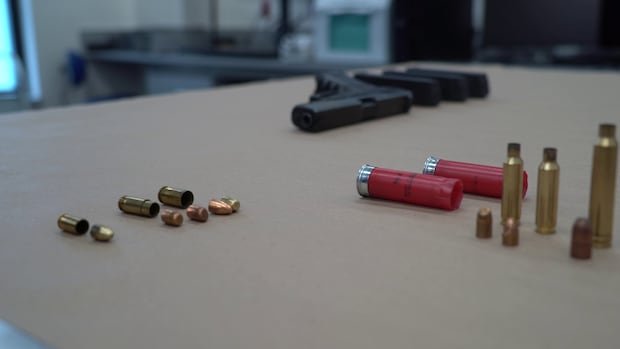
Additionally, firearms themselves possess unique identifiers, leaving distinct marks on bullets and casings when fired. Walsh demonstrates the process of preserving these “gun fingerprints” for cross-referencing in an international database to potentially link them to other crime scenes.
As criminal tactics evolve, experts like Walsh adapt to new challenges, such as the rise of ghost guns – untraceable 3D-printed weapons lacking traditional serial numbers. Despite these challenges, traditional forensic methods like DNA and fingerprint analysis remain valuable in investigations.
Detective Sergeant Jon Meinen from the Guns and Gangs Section highlights the significance of understanding the gun supply chain to curb gun-related activities. The majority of traced firearms have been sourced from the United States, emphasizing the need to address cross-border gun trafficking to enhance public safety in London. Meinen stresses the pivotal role of tracking gun origins in preventing illicit firearms from entering the city and contributing to a decline in gun-related incidents.