

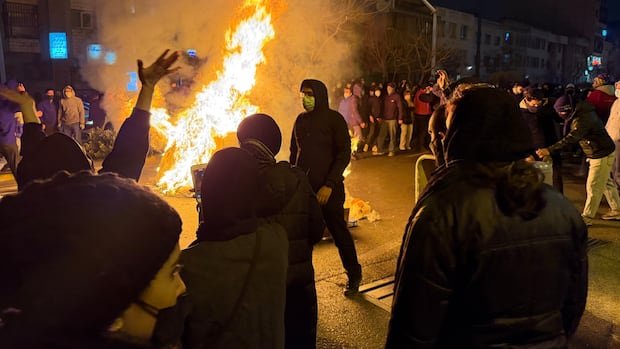

After a period of internet blackout in Iran, The Associated Press was able to reconnect with individuals in the country amidst ongoing protests following the partial restoration of communication channels. The demonstrations, which commenced over two weeks ago due to economic grievances, have escalated to include criticism against the ruling theocracy, particularly targeting 86-year-old Supreme Leader Ayatollah Ali Khamenei.
Recent imagery from Tehran showcases graffiti and slogans advocating for Khamenei’s demise, a charge punishable by death. Skylar Thompson from the Human Rights Activists News Agency (HRANA) expressed shock over the reported death toll surpassing 2,000 people, quadrupling the fatalities witnessed during the Mahsa Amini protests in 2022 within a mere two-week period. She cautioned that the toll is likely an underestimate and could rise further.
Later updates from HRANA raised the death toll to at least 2,571 individuals. Iranian witnesses, now able to communicate externally after a communication blackout, described a heavily guarded central Tehran with reports of vandalized buildings and disrupted public services.
Despite some individuals managing to contact the AP from Tehran, attempts to return calls from Dubai were unsuccessful due to ongoing communication restrictions, including the blockage of text messaging and internet access to international sites. Witnesses detailed a significant presence of law enforcement, including riot police and members of the Revolutionary Guard’s Basij force armed with weapons and batons, patrolling the capital.
During the unrest, banks and government facilities were targeted, with internet outages causing disruptions to normal operations. Although shops remained open, foot traffic was minimal, and the Grand Bazaar resumed operations following protests related to the currency devaluation.
Concerns among Iranians include fears of potential U.S. intervention following remarks by President Donald Trump regarding the situation in Iran. The uncertainty surrounding future developments, including the possibility of foreign military action, has sparked apprehension among the populace.
Reports emerged of security forces searching for Starlink terminals in Tehran, leading to raids on properties with satellite dishes. However, a Los Angeles-based activist revealed that Starlink was offering free internet service to Iran, providing a lifeline for connectivity amidst the ongoing turmoil.
Additionally, pro-government rallies were held nationwide, drawing praise from Khamenei who lauded the demonstrators as a show of strength against external adversaries. State TV coverage showcased large crowds chanting anti-American and anti-Israeli slogans, reflecting the polarized sentiments prevalent in the country.