

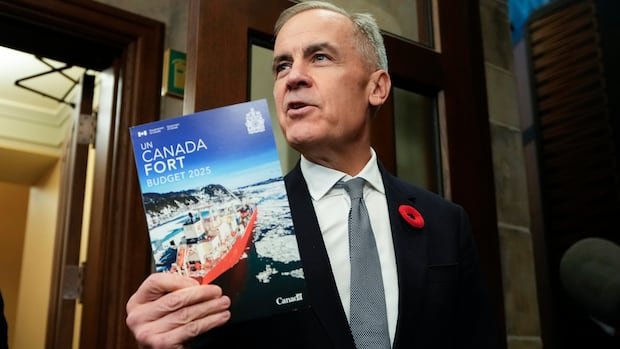

Indigenous leaders express worry following the recent federal budget announcement, as vital reconciliation programs face uncertainty beyond spring 2026, raising concerns of potential termination or significant funding reductions.
Following the release of the inaugural budget by Prime Minister Mark Carney’s minority Liberal government, a chart from an annex titled “Indigenous Reconciliation” has been widely shared on social media. This chart outlines various federal initiatives undertaken since the fall 2024 economic statement, highlighting temporary funding boosts for critical programs such as on-reserve education, First Nations and Inuit children’s wellness, emergency management, and urban programming for the current year. However, the columns for future years depict zeros repeatedly, sparking apprehension among Indigenous leaders.
Assembly of First Nations National Chief Cindy Woodhouse Nepinak expressed her apprehension regarding the future of these programs, emphasizing the need for immediate clarification. She highlighted that these programs are considered “sunset programs,” temporary measures with fixed funding or predetermined end dates requiring further discussion. Woodhouse Nepinak pledged to seek clarification from the Prime Minister’s Office to ascertain the specifics of the potential cuts.
Meanwhile, President Natan Obed of Inuit Tapiriit Kanatami (ITK) echoed similar concerns, particularly regarding the Inuit Child First Initiative, set to expire in March with no new funding allocation in the budget. Obed hinted at exploring legal options if equitable services for Inuit children are compromised. Indigenous Services Minister Mandy Gull-Masty assured that the government aims to modernize these sunsetting programs to align with community aspirations rather than terminate them.
Another program facing potential funding expiration in spring 2026 is Urban Programming for Indigenous Peoples, which supports friendship centers in urban areas providing critical services such as employment assistance, housing support, food security, childcare, youth programs, and mental health services. Concerns have been raised by the National Association of Friendship Centres and the Ontario Federation of Indigenous Friendship Centres regarding the risk these services face due to funding cuts.
The Manitoba Métis Federation welcomed the budget, with Finance Minister Anita Campbell dismissing concerns about the reconciliation programs’ future. While some had mixed reactions to the budget, it proposes a two percent spending cut at Indigenous Services Canada and Crown-Indigenous Relations and Northern Affairs Canada, translating to a reduction of approximately $500 million annually at ISC. Notable budget allocations include $2.3 billion for safe water in First Nations and $10.1 million for Indigenous consultations on expedited major projects.
Despite cautious optimism regarding certain budget aspects, concerns persist among Indigenous leaders about the adequacy of funding for crucial initiatives and the government’s commitment to reconciliation. President Victoria Pruden of the Métis National Council emphasized a “wait-and-see” approach to Carney’s development-focused agenda, expressing reservations about the depth of commitment to reconciliation reflected in the budget.
Overall, the budget’s proposals have evoked a range of responses from Indigenous leaders, with ongoing vigilance required to ensure the preservation and advancement of critical reconciliation programs.
[End of rewritten article]