

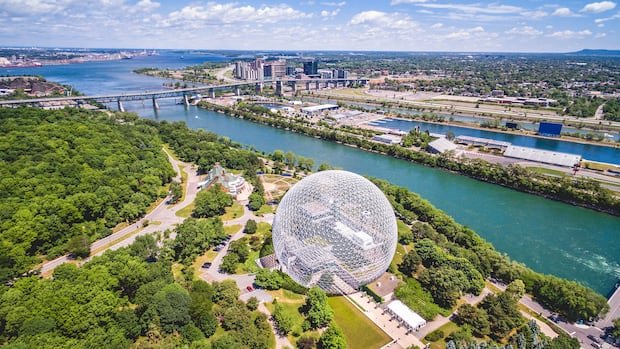

Almost six decades ago, Montreal showcased the world at the 1967 International and Universal Exposition. Expo 67 marked Canada’s centennial celebrations and spurred major infrastructure projects in the city. Hosting 62 nations and boasting nearly 100 thematic pavilions, the event attracted over 50 million visitors over six months, propelling Montreal onto the global stage and reshaping its urban landscape.
Despite the passage of time and the gradual disappearance of relics, remnants of Expo 67 still endure. Historian Roger La Roche emphasized the significance of the man-made islands that housed the fair, particularly Île Notre-Dame, created within 10 months using river sediments, quarry materials, and excavated landfill from Montreal’s new Metro system.
Iconic Expo 67 landmarks, including Moshe Safdie’s Habitat 67 housing complex and Buckminster Fuller’s geodesic dome, have evolved over the years. Many original pavilions and exhibits were intended to be temporary, leading to various fates such as dismantling, relocation, or repurposing. La Ronde, the theme park established during Expo 67, has seen a decline in its original rides, with La Spirale, an observation tower, slated for dismantling due to technical and financial challenges.
Monika Kin Gagnon, a communications professor, highlighted the importance of preserving Expo 67’s architectural heritage. She advocated for restoration over demolition, citing the historical and cultural significance of structures like the Tunisian pavilion. Gagnon’s involvement in developing an augmented walking tour through the WasteScapes app aims to raise awareness of Expo 67’s enduring legacy.
While some Expo 67 attractions face uncertain futures, efforts to maintain and showcase these historical landmarks persist. The evolving landscape of Montreal, shaped by Expo 67, serves as a reminder of the city’s rich history and architectural achievements.