

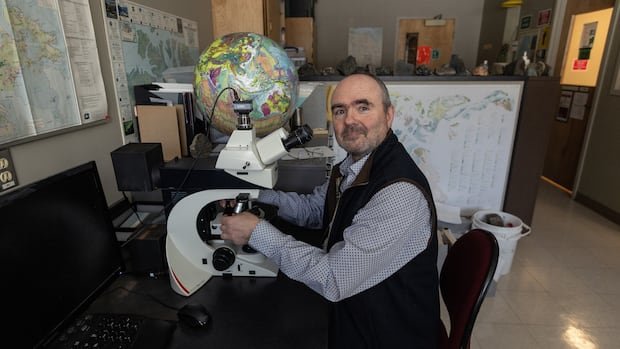

Renowned diamond expert and researcher, Graham Pearson, has been commemorated by having a newly unearthed mineral named after him. The International Mineralogical Association officially approved the naming of the mineral, now known as Grahampearsonite, which was discovered within a deep-Earth diamond found in Brazil.
Pearson, a distinguished mantle geochemist from the University of Alberta in Edmonton, has dedicated years to the study of mantle geology and mineralogy, establishing himself as a leading authority on diamonds and their role in uncovering insights about the Earth’s interior. His extensive research on diamonds, including significant findings in Brazil over a decade ago, has been instrumental in explaining the composition and water content of the Earth’s deep mantle through deep-mine diamonds.
Describing the honor of having a mineral named after him as “very humbling,” Pearson emphasized the lasting impact such recognition holds in the scientific community. Grahampearsonite, identified within a diamond formed at depths exceeding 300 kilometers beneath Brazil’s Juina region, boasts a chemical composition of calcium, phosphorus, and oxygen. Originally known as a synthetic material, the mineral, previously recognized as calcium pyrophosphate and commonly used in products like toothpaste abrasive, was discovered naturally for the first time.
Through thorough examination using X-rays, researchers scrutinized the crystal structure of Grahampearsonite while it remained encased in the diamond, leading to the decision to name the mineral after Pearson in acknowledgment of his significant contributions to diamond research. Pearson’s groundbreaking work extends beyond diamond studies, encompassing advancements in geochemical analysis techniques and innovative approaches to dating minute geological specimens.
Born in the UK and raised in an English mining town, Pearson’s fascination with diamonds was sparked during his doctoral studies under the tutelage of an advisor exploring a rare graphite mineral that originated as a diamond. His relocation to Canada in 2010 marked the beginning of his tenure at the University of Alberta, where he established the esteemed Arctic Resources Geochemistry Laboratory, continuing his research endeavors focused on minerals and diamonds in the Arctic region.
Pearson underscored the significance of ongoing mineral discoveries, emphasizing the importance of natural mineral occurrences over synthetic counterparts due to the unique narratives they unveil about Earth’s geological history. He highlighted the multifaceted nature of diamonds, noting their ability to encapsulate high pressures and offer valuable insights into plate tectonics cycles. With advancements in microscope technology facilitating the identification of new minerals, Pearson expressed optimism about humanity’s eventual discovery of all Earth’s mineral treasures, estimating that approximately 4,000 await exploration in addition to the 4,800 minerals already identified.