

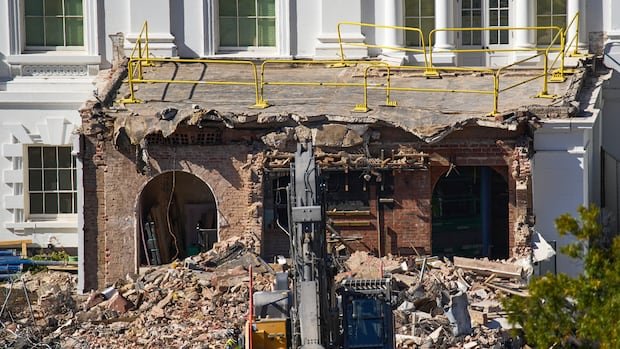

The Democrats have pledged to investigate the swift White House demolition led by President Donald Trump and his administration, triggering social media posts mourning the loss of the East Wing. The construction, which started three days prior, nearly obliterated the wing originally constructed over a century ago during President Teddy Roosevelt’s term. This wing historically served as the first lady’s base and the main entrance for public tours and official events like state dinners.
Simultaneously, the White House disclosed a list of contributors on Thursday who are financially supporting the construction of a new ballroom on the premises. The administration assures that this project will not burden taxpayers, emphasizing private sector donations. However, critics argue that soliciting funds from private entities raises concerns.
Democratic House leader Hakeem Jeffries criticized Trump’s alleged pay-to-play scheme and vowed to probe the demolition. Nonetheless, Democratic efforts are currently constrained by the Republican-controlled House until the upcoming midterms.
Leading tech companies such as Amazon, Apple, Meta, and Alphabet, along with longstanding Trump allies, were identified as donors. While exact donation amounts remain undisclosed, contributors have the option to make a lump sum payment or spread contributions over three installments by 2027.
Various corporations, including Lockheed Martin and Carrier, expressed gratitude for the opportunity to contribute to the ballroom project. The donations come amid Trump’s second term, during which his administration has pressured several sectors for concessions and actions on preferred policies. Criticism has arisen regarding potential conflicts of interest involving donors with existing federal contracts or benefits.
The proposed 90,000 square-foot ballroom, set to be the most significant structural alteration to the Executive Mansion in nearly eight decades, has seen evolving cost estimates, reaching up to $300 million. The project’s scale has expanded from a 650-seat capacity to nearly 1,000 seats. Trump’s shifting statements on the project’s costs and scope have raised eyebrows.
The White House has faced scrutiny for its lack of transparency regarding the impact of the demolition on critical facilities like the President’s Emergency Operations Center situated below the East Wing. Despite concerns from some Republican senators about the project’s optics and timing, others have praised Trump’s real estate expertise in overseeing such renovations.
Public reactions have been mixed, with tourists visiting the site to witness the demolition firsthand. While some support the renovation using private funds, others question the priorities of investing in lavish projects amid pressing national issues.