

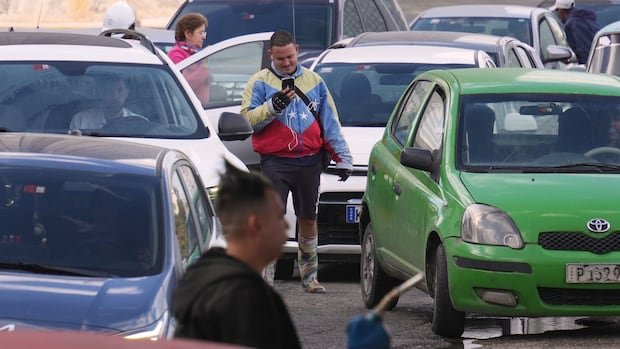

Cubans showed heightened interest when President Miguel Díaz-Canel addressed the nation regarding rumors of potential talks between the Cuban government and the Trump administration about the possibility of ending one-party rule. The U.S. President stated that discussions were ongoing, citing the challenges faced by Cuba as a nation. Díaz-Canel expressed Cuba’s openness to engage in dialogue with the United States on various topics without any pressure or preconditions.
The President’s recent remarks marked a shift from his previous strong language towards Trump, as he now emphasized the willingness to engage in constructive conversations. Díaz-Canel also pledged improvements to address the country’s severe energy shortages in the near future, although this assertion was met with skepticism by many observers.
The energy crisis in Cuba has been exacerbated by a recent executive order by Trump imposing sanctions on countries supplying oil to Cuba, leading to a blockade on essential fuel supplies. The country’s outdated electrical grid has been struggling, with frequent power cuts even before the oil blockade. Despite efforts to introduce solar power, challenges such as the lack of batteries have limited progress in this area.
The looming energy crisis coincided with an unprecedented cold spell in Cuba, further straining the situation. Analysts predict that the remaining fuel supplies in Cuba may only last for a few weeks, raising concerns about potential mass protests and the government’s response to public discontent.
Reports of possible secret meetings involving Alejandro Castro Espín, a key figure in Cuban politics, engaging with the CIA in Mexico have generated interest and skepticism. Castro Espín, known for his involvement in past talks with the Obama administration, represents a significant faction within the Cuban leadership.
While discussions about the future of Cuba continue, doubts persist among Cubans regarding the regime’s willingness to relinquish power. The prospect of negotiations with the U.S. raises questions about potential outcomes and the extent of any possible regime changes. Comparisons with Venezuela’s situation highlight concerns about the nature of any transitional processes and the role of external actors in shaping Cuba’s future.
Despite uncertainties, Cuban dissidents and analysts share common fears about potential violence, political transitions, and the impact on the Cuban populace. The path forward remains uncertain, with calls for free elections and democratic reforms echoing across various stakeholders. As Cuba navigates these challenges, international attention and diplomatic actions are crucial in shaping the country’s trajectory.