

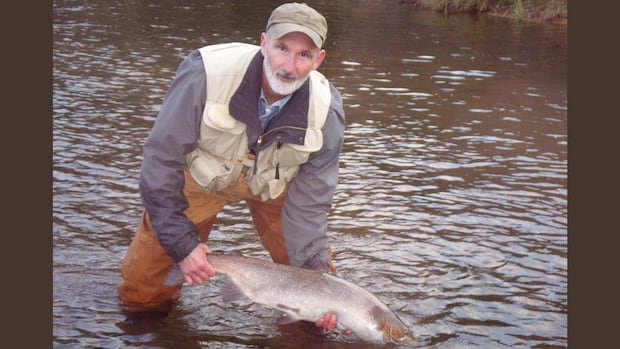

A federal advisory committee has broadened its list of imperiled Atlantic salmon populations, sparking concern among conservation organizations in Cape Breton. There are worries that the revision could result in the cessation of recreational fishing for this significant East Coast species in most areas of New Brunswick, Prince Edward Island, and Nova Scotia. Although the Department of Fisheries and Oceans acknowledges this possibility, it stresses that such an outcome is not inevitable.
The adjustment in evaluation status was revealed during recent federal fisheries meetings with stakeholders following the reevaluation of salmon populations by the Committee on the Status of Endangered Wildlife in Canada (COSEWIC). Rene Aucoin, president of the Cheticamp River Salmon Association, expressed surprise at the announcement made during the meetings. He highlighted the strength of salmon populations along the western side of Cape Breton Island, contrasting the situation with troubled populations along Nova Scotia’s Atlantic coast.
Bill Hailey, vice-president of the Margaree Salmon Association, concurred with Aucoin, emphasizing the health of salmon in the Margaree River compared to other regions facing challenges. Concerns are raised that the committee may advise the government to include the Nova Scotia and southern Gulf salmon populations under the Species at Risk Act, potentially leading to the end of recreational angling activities.
While a listing as endangered under federal law is plausible, Robert Jones from the Department of Fisheries and Oceans emphasized that the decision-making process involves various considerations, including scientific advice and socio-economic factors. The evaluation process is comprehensive and involves public consultation, conservation organizations, industry, and First Nations. Despite the potential long-term impact, stakeholders are gearing up to contest any permanent changes in the salmon’s status. The road ahead involves careful deliberation and assessment of the situation on a river-specific basis, indicating that the final outcome is yet to be determined.