

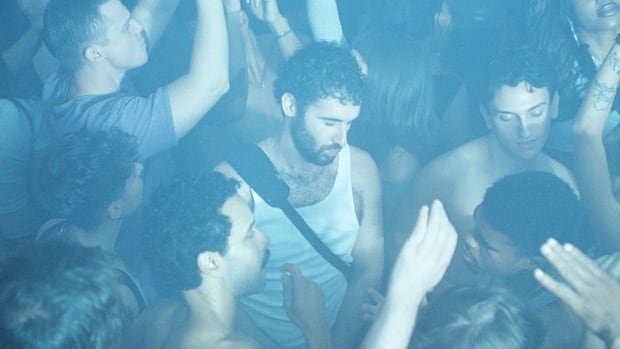

“Club Kid” tells the story of Peter, portrayed by Jordan Firstman, who navigates a hazy existence as a Club Kid, lacking direction and purpose. A carefree but discontented man in his thirties, Peter lives in his late mother’s spacious New York loft. He stumbles through life, showing up high to his party-promoter job and grappling with his recent firing.
The plot unfolds when Arlo (Reggie Absolom) appears at Peter’s door, a child from a past encounter with a British woman. After Arlo’s mother’s sudden death, Peter reluctantly takes in the young boy, unsure of how to handle the unexpected responsibility. Amid Peter’s protests and confusion, he begins to question his readiness for parenthood and the impact on his future.
As the story progresses, Peter’s initial reluctance gives way to a gradual realization of the joys and challenges of caring for Arlo. The film cleverly explores the dynamics between the two characters, subverting traditional melodramatic tropes. Despite following familiar themes of adult-child relationships seen in movies like “Big Daddy” and “About a Boy,” “Club Kid” offers a fresh perspective on the genre.
The narrative delves into Peter and Arlo’s evolving bond, highlighting moments of humor and heartwarming connection. The film portrays Arlo as surprisingly mature and resilient, despite his recent trauma. However, a shocking incident in a public park disrupts the fragile equilibrium, challenging Peter’s assumptions about parenthood and revealing deeper layers of Arlo’s past.
Director Jordan Firstman’s approach to the story cleverly plays with conventions, adding depth and nuance to the characters’ journey. Through genuine performances and a vibrant portrayal of New York’s party scene, “Club Kid” captures the essence of personal growth and sacrifice. Ultimately, the film celebrates the transformative power of accepting responsibility and embracing genuine connection, embodied in the endearing character of Arlo.