

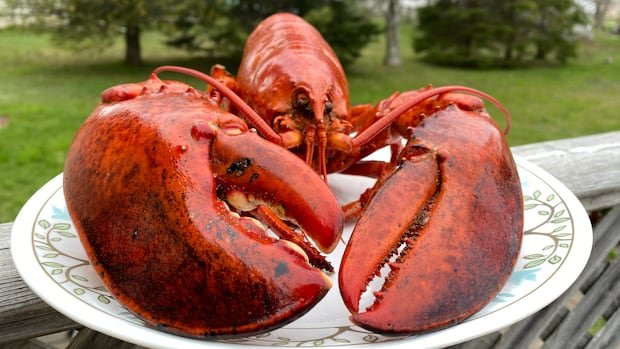

A culinary instructor at Nova Scotia Community College in Cape Breton is educating students on a more humane approach to cooking and preparing lobsters. Adam White, an experienced chef and instructor, has shifted his teaching methods based on research from England, where a ban on boiling lobsters alive is set to be enforced by 2030.
White emphasizes the importance of treating animals humanely, whether they are being cooked or killed for consumption. The move in England is in line with the Animal Welfare (Sentience) Act passed in 2022, recognizing that decapod crustaceans like lobsters can feel pain.
Traditionally, chefs would boil lobsters alive in salted water, but White now advocates for a different process. He teaches students to freeze lobsters briefly before swiftly and humanely killing them with a knife between the eyes. This method aims to reduce the pain experienced by the lobsters during the process.
The practice of boiling lobsters alive is prohibited in several countries, including Switzerland, Norway, and New Zealand. The decision in England follows a review by the London School of Economics, which highlighted the ability of crustaceans and cephalopods to feel pain, based on research conducted by Professor Robert Elwood.
Elwood, an expert in animal behavior, conducted experiments on crabs and lobsters, revealing stress responses consistent with pain rather than mere reflex reactions. He advocates for the use of more humane methods to minimize the suffering of these animals during the cooking process.
While Nova Scotia’s Department of Fisheries and Aquaculture has not indicated any immediate changes to existing practices, the discussion around more humane treatment of lobsters continues to gain traction worldwide. The shift towards more ethical practices in the culinary industry reflects a growing awareness of animal welfare concerns.
By educating future chefs on humane practices, instructors like Adam White are shaping the next generation of culinary professionals to prioritize ethical treatment of animals in food preparation.