

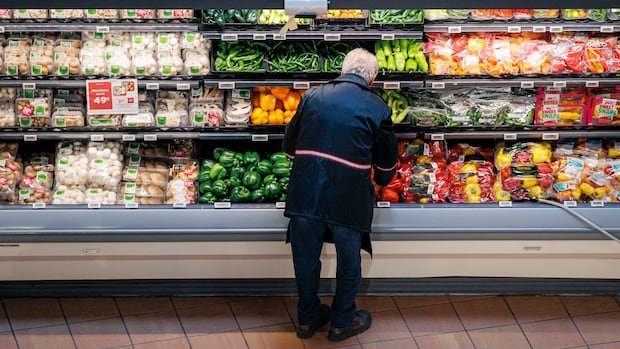

A year following the emergence of the “Buy Canadian” movement across the nation, the Canadian Food Inspection Agency (CFIA) is intensifying its actions against grocery stores that falsely present imported goods as Canadian products. This year, the federal food regulator has imposed fines on two Loblaw-owned grocery outlets for such violations. Additionally, an investigation into Canadian labelling and advertising practices at Sobeys’ headquarters is currently underway, as revealed by CBC News.
Responding to the consumer demand to support Canadian businesses, the CFIA emphasized its commitment to safeguarding Canadians from deceptive claims. Since the initiation of the Buy Canadian movement in February 2025, many grocery retailers have capitalized on patriotic symbols and signage to highlight domestic goods.
Previously, the CFIA had identified 27 violations in 2025 related to inaccurate country-of-origin claims by grocers, primarily national chains, without issuing fines. However, the recent enforcement approach change was demonstrated when a $10,000 fine was levied on a Loblaw-owned Fortinos in Toronto for misrepresenting a foreign-produced food item.
Federal regulations mandate that food labels and in-store signage must be precise and non-misleading. The CFIA reported a similar fine imposed on a Loblaw-owned Superstore in Toronto for promoting American-made products as Canadian.
The CFIA disclosed that between November 1, 2024, and February 25, 2026, a total of 78 violations regarding country-of-origin claims were identified at retail stores. The agency indicated that the leniency period has ended, emphasizing the need for accurate signage and enforcement actions where necessary.
The ongoing investigation into Sobeys involves instances of mislabelling discovered by the CFIA, including a Safeway store near Edmonton advertising imported products as Canadian. Both Loblaw and Sobeys have expressed their commitment to accurate country-of-origin labelling, acknowledging the challenges posed by managing extensive inventories.
Former CFIA inspector Terri Lee criticized the $10,000 fine imposed on large grocers, advocating for tiered penalties based on company size. Lee suggested substantial fines for major corporations, although current CFIA fines are capped at $15,000. The agency clarified that fines are part of its enforcement toolkit, alongside warnings, licence suspension, or legal action.
In line with the 2025 federal budget’s objectives, the CFIA plans to review government-issued penalties to ensure that non-compliance is not merely disregarded as a cost of business. The results of this review are expected to be disclosed in the 2026 federal budget.