

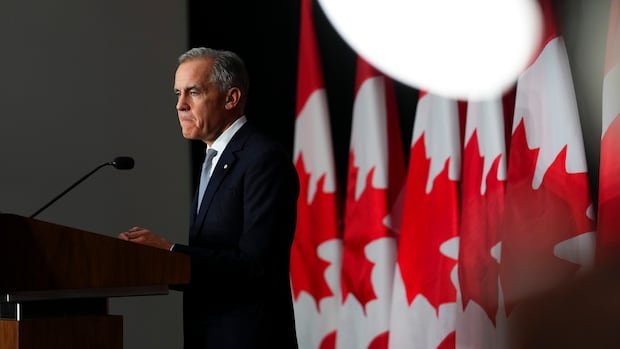

After Mark Carney delivered a speech at the University of Ottawa, Conservative leader Pierre Poilievre expressed disappointment in what he dubbed as the “sacrifice speech.” Poilievre criticized Carney for suggesting sacrifices, particularly for young Canadians already facing challenges, although Carney’s remarks were not exclusively directed at the youth.
Carney emphasized the need to balance the operating deficit in three years by cutting wasteful government spending and enhancing efficiency. He acknowledged that some desired activities might need to be reduced to focus on essential tasks for the country’s growth.
Although the specifics of these sacrifices remain unclear, Carney’s mention foreshadows upcoming tough decisions for Canadians in navigating a changing world.
The use of the term “sacrifice” by Carney garnered attention due to its rarity in political discourse, with leaders like Justin Trudeau rarely invoking it except during extraordinary circumstances. The last explicit mention of sacrifice by a finance minister during a budget speech in the House of Commons dates back to Jim Flaherty during the Great Recession in 2008.
Carney’s recent speech hinted at the need for significant actions akin to past crisis moments, possibly leading to substantial federal spending cuts. The upcoming budget is expected to reveal a higher deficit projection, signaling potential spending reductions that will likely draw criticism from opposition leaders like Poilievre.
As discussions around sacrifices unfold post-budget, questions about the fairness and distribution of these cuts will arise. The necessity of sacrifices may prompt debates on alternative revenue sources or spending measures to address the fiscal challenges ahead.
In essence, Carney’s call for sacrifices underscores the need for transparency and candid discussions about the tough choices facing Canada in the foreseeable future.