

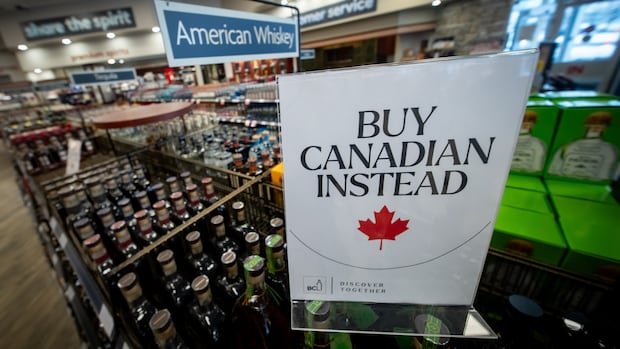

Martha Reynolds, a conscientious shopper in Halifax, is actively avoiding American products, including bourbon, in favor of scotch whisky and local wines like those from Nova Scotia, Ontario, and British Columbia. Her stance reflects a broader trend in Canada, where both consumers and provincial regulations are impacting American alcohol sales due to the ongoing trade war initiated by the U.S.
Chris Swonger, the president and CEO of the Distilled Spirits Council of the United States, expressed concern over the significant decline in exports to Canada, citing a 63% drop last year. The boycott of U.S. alcohol in various provinces, including Canada, has been a major factor contributing to this decline. Additionally, whisky producers rushed shipments to the EU in late 2024 to avoid potential tariffs, further affecting exports.
Despite the initial removal of American alcohol from shelves in response to the trade war, the Nova Scotia Liquor Corporation (NSLC) resumed selling existing stock last year without ordering more. NSLC reported a decrease in demand for American products over time, with sales dropping after an initial surge.
Not all products labeled as American are impacted by the boycott, as some are produced outside the U.S. For instance, Budweiser brewed in Halifax and Southern Comfort bottled in Montreal are exempt. The NSLC plans to provide further details on remaining products in June with the release of its annual financial results.
Swonger acknowledged the political tensions between the U.S. and Canada and expressed hope for improved relations. The Distilled Spirits Council of the United States remains committed to finding common ground with Canadian authorities and consumers to address the challenges facing American alcohol exports.
Overall, the trade war repercussions continue to affect American alcohol producers, emphasizing the ongoing economic impact and the complexities of international trade relations.