

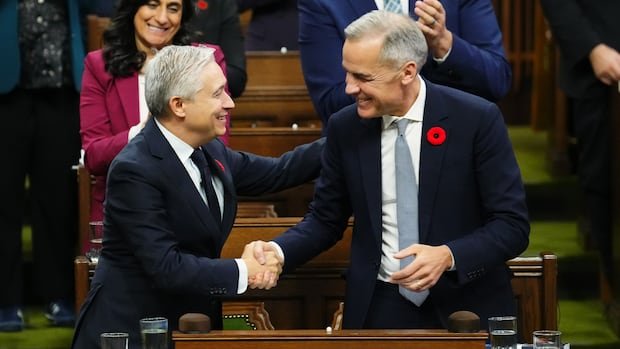

Prime Minister Mark Carney and his Liberal government introduced their inaugural budget last week, prompting numerous inquiries from concerned Canadians. To address these questions, we enlisted Catherine Cullen, host of “The House” podcast, and J.P. Tasker, a senior politics reporter for CBC News.
The primary budget vote is expected later this month, with a customary four-day debate period. Opposition parties will utilize this opportunity to critique the government, propose amendments, and potentially call for changes. Notably, the Liberals have withstood two confidence votes following the rejection of a Bloc amendment urging the House of Commons to dismiss the budget.
Regarding funding sources, the government plans to create job opportunities through local infrastructure investments totaling $51 billion over a decade. This move aims to stimulate employment growth, as evidenced by October’s addition of 67,000 jobs and a decrease in the unemployment rate to 6.9%.
On the topic of senior citizens, the budget lacks new specific provisions. Although election promises such as reducing minimum RRIF withdrawals and boosting GIS were not included, the budget indirectly benefits seniors through significant spending on senior benefits, notably OAS expenses projected to reach $100 billion annually.
For students, the budget outlines several initiatives, including funding boosts for Canada’s summer jobs program and the student work placement program. Additionally, changes to the Canada Student Grant eligibility are proposed, potentially saving $280 million by restricting access for international students at private colleges.
In the realm of housing, the budget allocates $13 billion over five years to enhance affordable housing supply. The government aims to increase purpose-built rental buildings and offers tax incentives for developers. Notably, the GST exemption on new homes up to $1 million and reduced rates for higher-priced homes are intended to improve affordability for first-time buyers.
Lastly, the budget introduces measures to enhance access to the Canada Disability Benefit, addressing concerns about the application process’s complexity and costs. A commitment to offset applicant expenses with over $100 million over four years is proposed to streamline the benefit access process.
If you seek further details on the budget, the full proposal can be accessed [here](https://budget.canada.ca/2025/report-rapport/pdf/budget-2025.pdf).