

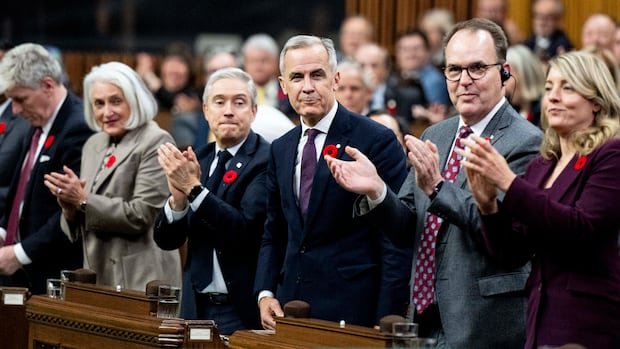

Prime Minister Mark Carney’s administration narrowly missed securing a majority in the recent election, requiring the Liberals to collaborate with an opposition party to pass their budget. Failing to pass the budget, considered a confidence vote, would result in the government’s downfall and possibly trigger a second election in Canada this year.
Although the Liberals gained an additional vote when former Conservative MP Chris d’Entremont crossed party lines on the same day the budget was unveiled, they still fall short of a majority in the House. Another challenge arose when Conservative MP Matt Jeneroux announced his resignation, creating uncertainty about the effective date.
The government managed to survive a confidence vote initiated by the Conservatives but faces another from the Bloc Québécois. The budget vote is scheduled post-Remembrance Day.
For Carney’s budget to succeed without prompting fresh elections, the Bloc Québécois, holding 22 seats, could align with the Liberals, who currently have 169 votes excluding the Speaker. The combined force of the Liberals and Bloc at 191 seats could surpass the Conservatives, NDP, and Greens.
The NDP, despite losing recognized party status, retains leverage with seven seats. If the NDP supports the budget, the combined votes with the Liberals could secure the budget’s passage. NDP interim Leader Don Davies expressed concerns about the budget’s details but is assessing the party’s stance.
The Green Party’s Elizabeth May, the sole Green vote in the House, demands improved climate policies in Carney’s budget. May’s support alone won’t suffice without another opposition MP’s backing.
In case all opposition parties reject the budget, the Liberals lack sufficient seats for its passage. Alternatively, if NDP or Bloc members abstain from voting, it could impact the outcome. Parties sometimes opt for abstention in confidence votes to avoid supporting the government but preventing a snap election.
The potential outcomes hinge on whipped votes or free votes, where MPs can vote independently. Parties may strategize to record dissent without triggering an election by manipulating MP participation in votes against the government.