

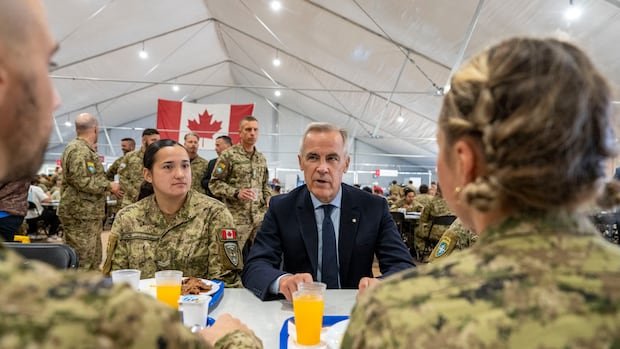

The Canadian government has prolonged its NATO mission in Latvia for an additional three years amid challenges in addressing equipment shortages caused by the evolving landscape of warfare influenced by the conflict in Ukraine.
Prime Minister Mark Carney announced the extension after meeting with Latvian Prime Minister Evika Silina in Riga, the Baltic nation’s capital. During his visit to Camp Adazi, where around 2,200 Canadian troops are stationed alongside forces from over a dozen NATO countries, Carney emphasized the importance of strength in achieving peace.
Carney highlighted the persistent threat posed by Russia, particularly in light of the illegal invasion of Ukraine, which shattered previous assumptions about European security post-Cold War. The extension of Canada’s military presence in Latvia until 2029 reflects the government’s commitment to NATO and bolstering defense capabilities.
Before addressing the troops, Carney inspected newly constructed facilities housing Canadian Leopard 2A4 main battle tanks, many of which are aging models from the late 1980s and early 1990s, posing challenges in maintaining spare parts for operational readiness.
Defense Minister David McGuinty acknowledged the need for tank replacements, emphasizing the government’s commitment to revitalizing the Canadian Armed Forces through increased defense spending. The government is collaborating with military professionals to assess needs and ensure they are met effectively.
During the tour, Carney was accompanied by Col. Kris Reeves, the Canadian brigade commander, and Maj.-Gen. Jette Albinus, the Danish commander of the NATO division in Latvia, who expressed gratitude for Canada’s ongoing support.
Amid the evolving warfare landscape, the government swiftly procured anti-drone, anti-tank, and short-range air defense systems for troops in Latvia. The introduction of RQ-21 Blackjack surveillance drones in Latvia underscores the importance of adapting to modern warfare tactics seen in the conflict in Ukraine.
Reeves emphasized the significance of the deployment extension in providing stability for planning and cooperation with allies, expressing confidence in the enduring commitment to the mission in Latvia.