

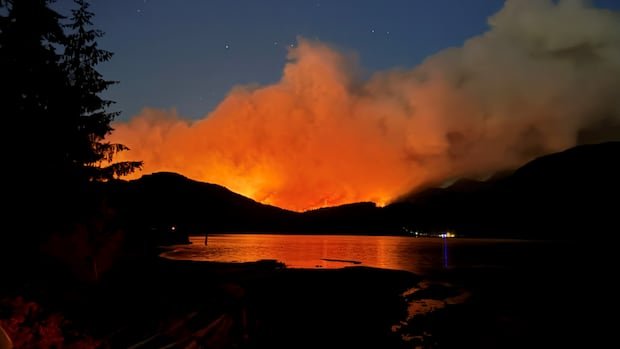

Wildfires in Canada may have a calm beginning, but experts warn that persistent drought and a warm summer could lead to another harsh season. Mike Flannigan, a wildfire specialist, sees this year as a pivotal moment to determine if Canada’s wildfire seasons, impacted by human-induced climate change, have transitioned into a new norm. He suggests that most years may now lean towards being challenging fire seasons.
Although it is not possible to precisely forecast the upcoming wildfire season in April, certain indicators hint at potential risks. Some regions of Canada, including traditional wildfire hot spots like British Columbia’s southern Interior, northern Manitoba, and eastern Northwest Territories, have already faced abnormally dry or drought conditions after winter.
Long-term weather forecasts predict above-average temperatures across much of Canada in the following months. Additionally, the onset of El Niño, a warming phase of a recurring climate pattern, is anticipated for this summer. Despite these circumstances, a considerable portion of Canada is starting the wildfire season in better condition due to a substantial snowpack from a stormy winter, especially in northern areas.
The country has experienced three consecutive severe fire seasons, with last year ranking as the second worst after 2023’s devastating wildfires. Scientists attribute the trend of severe fire seasons to escalating climate change caused by fossil fuel combustion. The warmer climate dries out vegetation, turning forests into highly flammable environments. This situation, coupled with increasing heat waves and droughts, enhances the probability and intensity of wildfires.
Moreover, managed forests in Canada have begun emitting more carbon than they absorb, contributing to a negative climate feedback loop. The 2023 wildfires alone released a substantial amount of greenhouse gases, rivaling emissions from countries like China, India, and the United States. Unusual wildfire behavior, such as fire-induced thunderstorms, has become more frequent, showcasing the escalating severity of wildfires.
Apart from the immediate dangers of wildfires, smoke from fires poses significant health risks, leading to evacuations and post-traumatic stress among affected individuals. Smoke exposure during wildfires can result in numerous premature deaths and extensive economic costs, as highlighted in a Health Canada report.
As Canada transitions from winter, it is crucial for people to remain cautious of wildfire hazards. Derrick Forsythe, a wildfire information officer, emphasizes the importance of preventing new fires by ensuring all potential fuel sources, like dead vegetation, are properly extinguished. Vigilance and responsible behavior are key in reducing wildfire risks, particularly during the spring season.