

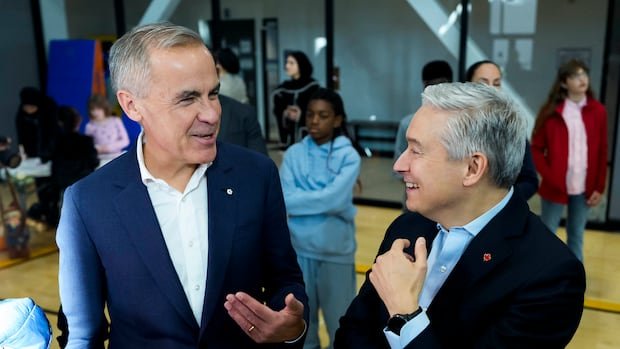

After a series of government spending announcements preceding budget day, the main question lingering is the size of the deficit and the potential impact of anticipated cuts. Prime Minister Mark Carney and Finance Minister François-Philippe Champagne have characterized the upcoming budget as a generational one, emphasizing the need to “spend less” to “invest more” in light of current global economic challenges and geopolitical uncertainties. They have hinted at tough decisions and sacrifices to be made, setting the stage for potentially significant budgetary measures.
A senior government official, speaking on the condition of anonymity, highlighted the necessity of making crucial decisions due to shifting international dynamics, particularly the evolving relationship with the U.S. that was previously perceived as stable but is now facing strains.
Carney’s recent speech outlining the budget as a means to empower and safeguard Canadians while bolstering the nation internally has raised expectations. Industry experts like Theo Argitis from the Business Council of Canada are anticipating a serious budget that demonstrates political courage and prioritizes key areas.
The focus on strengthening Canada domestically rather than solely relying on foreign investments, particularly in sectors like EV battery plants, has garnered support from stakeholders like Benjamin Bergen, president of the Council of Canadian Innovators. While specific details about the budget remain undisclosed, there has been increased engagement between the government and stakeholders regarding enhancing domestic capacity.
Several pre-budget announcements have hinted at various allocations, including significant investments in defense, housing, nuclear reactors, and other strategic areas. Defense spending is expected to see a substantial increase in line with international commitments, with a shift towards more transparent budgeting practices separating operational and capital expenditures.
Despite the emphasis on strategic investments, the projected deficit for this year is anticipated to be significantly higher than previous estimates, prompting discussions on the quality and purpose of government expenditures. The upcoming budget’s approval in the House of Commons remains uncertain, with opposition parties weighing the potential consequences of supporting or rejecting the budget, which could potentially lead to further political instability.